
Game Talk
Ultimate Guide to Eco-Friendly Game Design
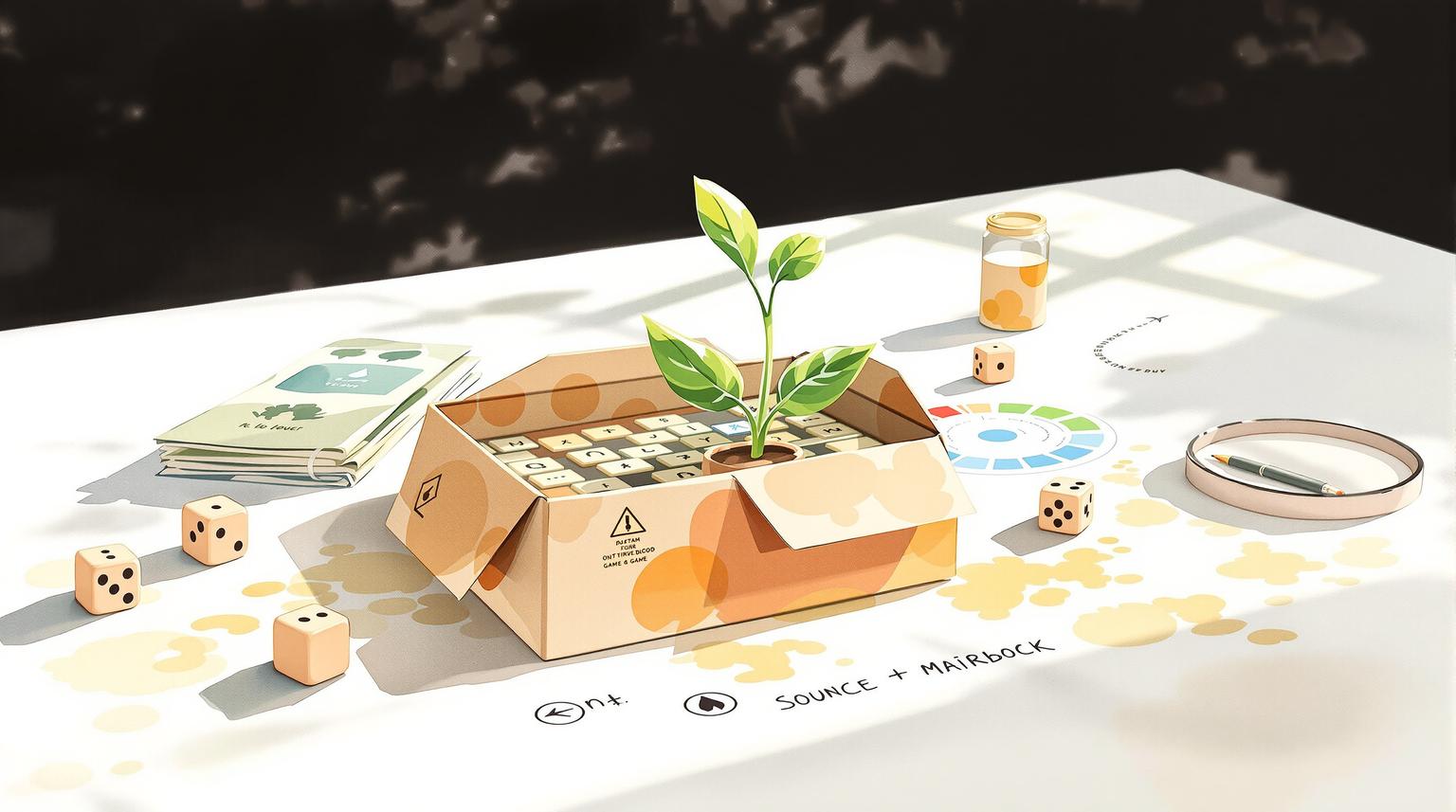
Tabletop games can be fun, but their production often harms the planet. Here’s how game creators are making better choices to reduce waste and emissions:
- Materials Matter: Cardboard and FSC-certified recycled paper are replacing plastics. Some companies use bagasse (sugarcane pulp) or bioplastics for durable components.
- Smarter Packaging: Smaller boxes and recyclable materials like mushroom packaging cut shipping emissions and waste.
- Energy Savings: Print-on-demand eliminates excess inventory, while efficient manufacturing methods reduce resource use.
- Gameplay with Purpose: Games now feature conservation themes, teaching players about resource management and sustainability through mechanics and stories.
Efforts like these are becoming standard, with companies like Stonemaier Games and MINIFINITI leading by example. The shift isn’t just good for the planet - it can lower costs and improve product quality.
Speaking with LudoFact Manufacturing | Sustainable Board Game Options | One Pip Wonder
sbb-itb-7b84150
Selecting Eco-Friendly Materials for Game Components
Eco-Friendly Materials Comparison for Tabletop Game Components
The materials you pick for your game components can have a big impact on the environment. Cardboard stands out as one of the most sustainable options because it has a low carbon footprint, is naturally biodegradable, and reduces shipping weight. For game boards and boxes, grey board - made by compressing recycled newspaper and packaging pulp - is a durable and eco-conscious choice that helps cut down on landfill waste.
Many designers are also opting for sustainable wood sourced from certified timber plantations for tokens and miniatures. This provides a natural aesthetic while keeping environmental impact low. Let’s explore some specific materials that can help reduce ecological harm.
Recycled Paper and Cardstock
FSC-certified recycled paper is now the go-to material for cards and rulebooks. Even small reductions in page count can lead to significant savings in paper usage. Recycling just one ton of paper can save up to 17 mature trees and thousands of liters of water. Recycled cardboard, which is both renewable and compostable, can also be printed using vegetable-based inks to make it even more environmentally friendly.
Plant-Based Plastics and Biodegradable Options
While paper is highly recyclable, some components require sturdier materials. That’s where plant-based plastics and biodegradable alternatives come in. Bagasse, a byproduct of sugar production, can be molded into trays to replace plastic inserts entirely. Bioplastics, made from renewable sources like corn, sugarcane, or seaweed, have a smaller carbon footprint compared to petroleum-based plastics. However, they still have a higher environmental cost than materials like wood or cardboard. The good news is that modern bioplastics are now just as strong as conventional plastics, making them a solid option for durable game pieces. As advancements continue and costs drop, bioplastics could eventually replace much of the single-use plastic market.
Non-Toxic Inks and Adhesives
Using vegetable-based inks and water-based coatings is another way to reduce chemical waste. Soy-based toners are a popular eco-friendly alternative to petroleum-based printing, while water-based and UV coatings protect components and improve durability with a smaller environmental footprint. Epoxidized soybean oil can even act as a natural plasticizer, providing flexibility without relying on petroleum-based additives. When paired with recycled paper, vegetable-based inks ensure that the final product remains compostable.
Energy-Efficient Production Methods
Strategic production methods are just as important as sustainable materials when it comes to reducing resource consumption. By focusing on minimizing energy waste during manufacturing, companies can lower emissions and save on costs. The goal is simple: produce only what’s necessary while cutting waste at every stage. Advances in materials are crucial, but the manufacturing process itself offers plenty of opportunities to save energy.
Cutting Waste During Prototyping
Print-on-demand manufacturing is a game changer when it comes to reducing waste. According to Tania Walker from Launch Tabletop, this approach eliminates the problem of excess stock by producing only what’s needed.
Even small tweaks in design can lead to noticeable savings. For example, hiring a professional editor to refine a rulebook can significantly cut down on paper usage during large print runs.
Efficient Manufacturing Techniques
Beyond prototyping, refining the manufacturing process can further boost energy efficiency. One impactful change? Optimizing box sizes. Smaller boxes not only use less material but also take up less space during shipping. This reduces transportation emissions and appeals to collectors who prefer packaging that’s easy to store.
Material choices are another critical factor. Replacing plastic inserts with options like folded corrugated cardboard trays or molded bagasse trays avoids the energy-intensive process of plastic production. Similarly, switching from consumable scoresheet pads to reusable dry-erase boards eliminates the ongoing energy demand of producing replacement paper products.
Eco-Friendly Packaging and Shipping
Once materials and production are optimized, the next focus should be on eco-friendly packaging and shipping. These areas offer a huge chance to cut down emissions and waste. In fact, over 60% of consumers now lean toward brands that use sustainable packaging materials.
Recyclable Packaging Materials
When it comes to packaging games, recycled cardboard is a top choice. Grey board, a sturdy recycled material, works especially well for packaging heavy components. It’s less expensive than wood or plastic and has a smaller carbon footprint. To strengthen your eco-credentials, look for materials certified by the Forest Stewardship Council (FSC), which promotes sustainable forest management and helps prevent deforestation.
For something different, consider mushroom packaging (mycelium). This innovative material is grown from mushroom roots and agricultural byproducts like hemp hurd. It’s fully home-compostable and provides excellent insulation. Another option is upcycled wool, which offers natural shock absorption and elasticity, making it a great way to protect fragile items. With nearly 200,000 tons of wool wasted annually in Europe, this approach gives new life to an underutilized resource.
Switching to sustainable packaging doesn’t mean sacrificing durability. For example, one retailer saw a 17% drop in damaged returns after moving to sturdier, custom-printed eco-friendly boxes. This proves that recycled materials can be just as effective as traditional ones when engineered properly.
Efficient packaging not only safeguards your product but also helps reduce shipping emissions.
Reducing Shipping Emissions
After addressing production and packaging, the next step is cutting down shipping emissions. Compact packaging design is a quick win here. Smaller game boxes use less material, take up less space in trucks, and lead to lower transportation emissions. Plus, collectors will appreciate the easier storage.
For shipping materials, consider recycled LDPE poly mailers with a 2.95 MIL thickness. These mailers offer weather resistance and durability while staying eco-friendly. Many also include two adhesive strips, allowing customers to reuse them for returns or storage.
To stay ahead of the curve, check out resources like the Green Games Guide, which was updated in March 2026 with the latest recommendations on sustainable shipping technologies and materials. Industry events, such as the Game Developers Conference, now feature sessions dedicated to environmental practices for tabletop creators, underlining the growing importance of sustainable distribution.
Building Environmental Themes into Games
Using eco-friendly materials and efficient production methods can reduce a game’s environmental footprint, but weaving environmental themes into gameplay takes the impact further. By embedding eco-conscious ideas directly into the mechanics and stories, games can become powerful tools for teaching conservation and inspiring action.
Game Mechanics Focused on Conservation
Game mechanics that focus on managing resources can reflect real-world conservation challenges. Players might need to balance immediate needs with long-term ecosystem health. For instance, a game could require players to harvest trees while ensuring they plant new ones or to collect waste and transform it into valuable items - mirroring the principles of a circular economy.
The trick is to make environmental consequences clear and impactful. Real-time ecosystem simulations can show how resource exploitation affects the environment. For example, a game might feature an “ecosystem collapse” as a failure state, driving home the dangers of overuse. Lem Apperson, a game developer, explains the potential of this approach:
“By incorporating sustainability themes and mechanics, developers can educate players on the importance of environmental conservation and inspire them to take action in the real world”.
Initiatives like Playing for the Planet, supported by the UN Environment Programme, and the Green Game Jam offer game developers resources to experiment with these ideas. These programs encourage studios to create mechanics that are both engaging and educational.
This approach to game mechanics sets the stage for narratives that further explore environmental responsibility.
Stories That Address Environmental Challenges
Stories centered on themes like environmental restoration or preventing ecological disasters give players a sense of purpose while addressing critical issues. Building a climate-related theme into the narrative from the beginning can amplify its impact. Joost Vervoort, Associate Professor of Transformative Imagination at Utrecht University, highlights the unique potential of games:
“Playfulness can loosen us from the constraints of society and its norms and values, and help us to re-perceive what is simply considered to be accepted reality”.
Blending factual information with imaginative storytelling can make complex environmental issues easier to understand. For example, the International Monetary Fund has highlighted that a single whale contributes as much to the climate as 1,000 trees by fertilizing phytoplankton, which produce half of the world’s oxygen. Facts like these can inspire compelling game narratives. However, the gameplay must remain enjoyable - if a game isn’t fun or engaging, its educational message won’t stick.
Even small touches, like sustainability-focused tips on loading screens or subtle elements in world-building, can nudge players toward eco-conscious thinking without feeling preachy.
These story-driven elements, combined with sustainable manufacturing and packaging, reinforce the gaming industry’s role in promoting environmental awareness and action.
Case Study: MINIFINITI’s Approach to Eco-Friendly Design
MINIFINITI offers a practical example of how sustainable practices can be woven into tabletop game production. Their game, Red Tape, highlights thoughtful design choices that align with the growing emphasis on eco-consciousness in the industry. This case study showcases how material selection and production methods can support sustainability goals.
For materials, MINIFINITI uses FSC-certified paper and recycled cardboard for game boxes and components. Game pieces are crafted from bio-based plastics like PLA and other biodegradable alternatives, while vegetable-based or soy inks ensure vibrant, eco-friendly printing results.
But MINIFINITI’s commitment goes beyond manufacturing. They host weekly game nights, creating a sense of community and fostering immersive play experiences, further reflecting their eco-conscious ethos.
With a prototype price of $39.99 for Red Tape, MINIFINITI demonstrates that sustainable game design can be both achievable and affordable. Their efforts show that small and mid-sized companies can embrace sustainability at every stage, from sourcing materials to engaging with players. This approach highlights how environmental responsibility and captivating gameplay can go hand in hand, echoing the guide’s emphasis on holistic eco-friendly design.
Certifications and Measuring Environmental Impact
Eco-Certifications for Game Producers
When it comes to tabletop games, FSC (Forest Stewardship Council) certification stands out as a key indicator of responsible sourcing. It ensures that paper and cardboard components used in games come from forests managed responsibly. Another valuable resource is the Green Games Guide, which serves as a comprehensive reference for sustainable production practices. Updated to version 1.1 in March 2026, the guide now includes expanded advice on textiles, materials, and manufacturing methods.
Recognition for eco-conscious efforts in the gaming world includes the Origins Sustainable Production Award, which celebrates games that make meaningful progress in sustainable production. As Zatu Games puts it:
“Eco-friendly and sustainable design is no longer a niche ‘nice idea’ for a few environmentally focused publishers. It is steadily becoming part of the mainstream conversation…”
While certifications like these highlight sustainable practices, the other side of the equation involves accurately measuring and reducing emissions.
Calculating and Lowering Carbon Emissions
Beyond certifications, reducing carbon emissions is essential for sustainable game production. This process typically involves four steps: defining the scope of emissions, collecting relevant data, offsetting emissions, and making operational changes to mitigate future impacts. To assist studios, the Playing for the Planet Carbon Calculator, developed in collaboration with The Carbon Trust, provides a tool for tracking emissions in line with the Greenhouse Gas Protocol. For tabletop game producers, areas of focus often include office energy consumption, transportation (such as flights and commutes), and production-related emissions.
A standout example comes from Space Ape Games, a London-based studio that calculated its total carbon emissions at 750 tonnes CO2(e) in 2018, with an additional 180 tonnes generated by player activities. In response, the company adopted a policy to offset 200% of its footprint. They also reduced annual flight distances from roughly 1.7 million km (about 1.06 million miles) to 1.4 million km (about 0.87 million miles) by consolidating travel and using conference calls instead. Nic Walker, the studio’s Head of Technical Operations, explained:
“Offsetting emissions is only the first step; the goal is to adapt lifestyles and reverse environmental impacts”.
For broader industry collaboration, the Sustainable Games Alliance (SGA) Standard provides a global framework for sustainability reporting. This standard encourages data sharing and benchmarking across the industry. As María Sayans, CEO of Ustwo Games, stresses:
“The games industry needs a standard framework to measure the carbon impact of our products and services. We need benchmarks, real data and a common language so that we can work together”.
Conclusion: What’s Next for Eco-Friendly Game Design
Tabletop gaming is at a pivotal moment. Eco-friendly design is no longer optional - it’s the new norm. Publishers are proving that sustainable practices can coexist with high-quality products. For example, Gibsons Games eliminated shrink wrap entirely by May 2026 and replaced plastic inserts with bagasse trays, showcasing how small shifts can make a big difference.
Game designers now face the challenge of considering a product’s entire lifecycle - from raw materials to disposal. Even minor adjustments can have a huge ripple effect. For instance, cutting just four pages from a rulebook across 5,000 copies saves 20,000 sheets of paper.
The industry is also embracing innovative production methods. Print-on-demand technology is reducing waste by eliminating surplus inventory, while collaborations with academic institutions are tackling complex environmental challenges head-on. Professor Paul Wake, a Board Member of the Green Games Guide, highlights a gap in the industry’s focus on artificial intelligence:
“Artificial intelligence is one of the most talked-about topics in the games industry right now, but how much of that conversation is actually about environmental impact? … not nearly enough”.
New benchmarks and resources are paving the way for sustainable growth. Awards like the Origins Sustainable Production Award and updates in the Green Games Guide (version 1.1, March 2026) are raising the bar. These resources now include expanded advice on textiles and emerging technologies. Every choice matters - whether it’s swapping plastic for cardboard or designing smaller boxes to cut down on shipping emissions. Each decision contributes to building a more sustainable future for tabletop gaming.
FAQs
How do I choose between recycled paper, wood, and bioplastics for my components?
When choosing materials for your game components, think about these options:
- Recycled paper: A budget-friendly and flexible choice that’s also environmentally friendly. Perfect for items like boards and cards.
- Wood: A sturdy, natural material that adds a classic touch. When sourced responsibly, it also has a smaller environmental impact.
- Bioplastics: These are biodegradable and a greener alternative to traditional plastics, though their cost and durability can differ.
Weigh the environmental impact, longevity, cost, and visual appeal to decide what works best for your game.
What’s the easiest way to cut shipping emissions without hurting durability?
To cut down on shipping emissions while maintaining product durability, opt for eco-friendly materials like recycled or biodegradable options for both packaging and components. Reducing plastic use is key, as it’s increasingly being substituted with more sustainable alternatives. This strategy ensures you can prioritize environmental care without compromising on product safety.
How can I measure my game’s carbon footprint in a practical way?
To estimate your game’s carbon footprint, start by examining critical aspects such as materials, manufacturing, and transportation. Collect detailed information about the types and quantities of materials used, as well as shipping methods and distances. Use this data with available emission factors to calculate the environmental impact. Monitoring these metrics over time can reveal patterns and opportunities to minimize emissions. Taking this organized approach simplifies managing and reducing your game’s environmental impact.