
Game Talk
5 Tips for Choosing Cooperative or Competitive Games
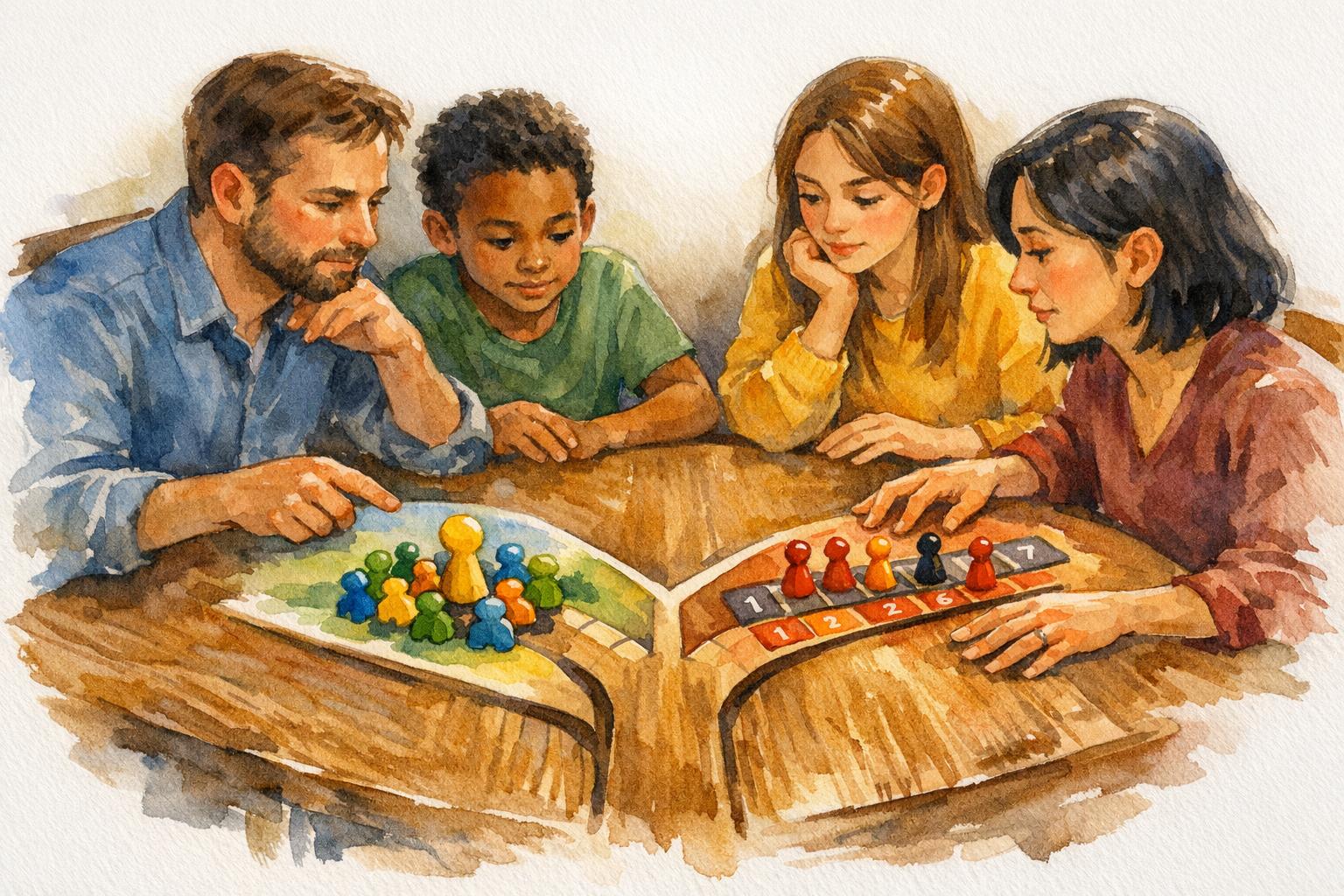
When planning a game night, the big question is: Should you work together or compete? Cooperative games focus on teamwork to achieve shared goals, while competitive games challenge players to outsmart each other for individual victory. The right choice depends on your group’s size, relationships, experience, and preferences.
Key Takeaways:
- Group Size & Dynamics: Cooperative games work well for larger groups or mixed skill levels, reducing tension and encouraging collaboration. Competitive games are ideal for smaller, tight-knit groups that enjoy rivalry.
- Player Experience: New players benefit from cooperative games, while experienced players often prefer the challenge of competitive ones.
- Preferences: Choose cooperative games for shared storytelling and teamwork, or competitive games for individual strategy and bluffing.
- Age & Temperament: Younger or sensitive players may enjoy cooperative games more, as they focus on shared wins and reduce personal losses.
- Game Collection: Keep a mix of both types to suit different moods and group dynamics.
Quick Comparison:
Factor
Cooperative Games
Competitive Games
Group Size
Best for 5+ players
Ideal for 2–4 players
Player Interaction
Teamwork, open communication
Bluffing, secrecy, individual strategy
Strengths
Reduces tension, great for beginners
High stakes, clear rankings
Drawbacks
Risk of one player dominating (quarterbacking)
Potential for conflict or hurt feelings
Best For
Mixed skill levels, families, new players
Close friends, experienced gamers
Choosing the right game ensures everyone has fun and stays engaged. Read on for detailed tips to match your group with the perfect game.
Cooperative vs Competitive Games: Quick Comparison Guide
Ep 072 | Cooperative vs Competitive PROs and CONs
sbb-itb-7b84150
1. Check Your Group Size and Player Relationships
The size of your group plays a big role in picking the right game. For larger gatherings of five or more, cooperative games often shine. They keep everyone involved and minimize long waits between turns. For example, in a six-player game, something like Pandemic can ensure that every participant gets a say. According to a 2023 BoardGameGeek survey of 15,000 gamers, 62% preferred cooperative games for groups of five or more, largely because they help reduce arguments and keep the atmosphere friendly. Beyond just numbers, think about how well the players know and communicate with each other.
Relationships among players are just as important as group size. If you’re hosting strangers or casual acquaintances, cooperative games are a great way to build connections without the stress of competition. In fact, Hasbro’s 2024 Gaming Report found that new groups had a 78% higher retention rate when starting with cooperative games. On the other hand, close friends often enjoy the banter and rivalry that come with competitive games - they know that what happens in the game stays in the game. For smaller, well-matched groups, competitive games can offer a completely different kind of fun.
For groups of 2–4 players with similar skill levels, competitive games provide a focused and strategic experience. Take Ticket to Ride as an example: a 2024 case study from Hasbro showed that a three-player family in Texas saw their satisfaction levels increase by 52% when they played the game. Gameplay disputes also dropped significantly - from three per session to just 0.5. Parent Alex Kim noted that the competitive scoring motivated all the siblings, with the family rating their sessions an impressive 4.8 out of 5.
Cooperative games are especially good at balancing skill differences between players, while competitive games reward those who love a strategic challenge. Game designer Jamey Stegmaier suggests that cooperative games help “equalize fun” in groups of more than four players or those with varied skill levels. Understanding how to design cooperative board games can help you appreciate how these mechanics balance different player abilities. Meanwhile, competitive games tend to suit “tight-knit rivals” who thrive on a bit of friendly competition.
Before following a game night hosting checklist, take a moment to think about your players. Are they strangers, casual acquaintances, or close friends? If more than 30% of the group prefers a less competitive vibe, go for a cooperative game like MINIFINITI’s Red Tape. It’s a fun mix of humor and strategy that encourages teamwork while keeping everyone entertained.
2. Match Games to Player Experience
When choosing between cooperative and competitive games, it’s important to consider the experience level of your players. For beginners, cooperative games are often the best choice. These games create a supportive environment where players can learn from teammates, ask questions, and build confidence without the pressure of direct competition. Working together toward a shared goal helps new players ease into the world of tabletop gaming.
On the other hand, experienced players often gravitate toward competitive games that challenge them with tactical planning, resource management, and direct player interactions. According to Mahtgician Games, competitive games should offer multiple ways to win, ensuring gameplay stays unpredictable and engaging.
If your group includes a mix of skill levels, game mechanics become even more critical. For seasoned players, prioritize games that avoid “runaway winners” - those situations where one player pulls ahead early and becomes unbeatable. As Mahtgician Games puts it:
“In competitive games, balance the pacing to ensure the game remains dynamic and engaging throughout, avoiding early leader advantages or runaway winners.”
The complexity of the game should also match your group’s overall experience. If most players are new to tabletop gaming, start with a cooperative game that has straightforward rules and clear objectives. Once everyone is comfortable with the basics, you can introduce competitive games that require deeper strategy. For groups made up mostly of experienced players, look for competitive games with interactive mechanics, where players must adapt to their opponents’ moves rather than sticking to a fixed strategy.
Finally, think about your group’s personal preferences, as those will also play a big role in finding the perfect game.
3. Pick Games That Match Player Preferences
Once you’ve aligned the game’s complexity with your group’s experience level, it’s time to consider their preferences. What do your players actually want out of game night? Some people love the social aspect and shared experiences, while others thrive on competition and the thrill of victory. Understanding this can make or break the fun.
If your group enjoys camaraderie and collective storytelling, cooperative games like Pandemic or Roll for Adventure are excellent choices. These games focus on teamwork, where everyone contributes to a shared goal. They’re all about creating moments where the whole group feels like they’re in it together - win or lose.
On the flip side, competitive games cater to those who enjoy individual achievement and a bit of rivalry. In these games, one player’s success often comes at the expense of another, which brings a level of tension that some groups find exciting rather than stressful.
Take a closer look at how your group communicates and makes decisions. Cooperative games require open communication and collaborative problem-solving. Keeping secrets or withholding information in these games can work against the team. In contrast, competitive games often rely on bluffing, secrecy, and strategic misdirection. If your group thrives on constant discussion and teamwork, cooperative games will feel natural. If they prefer keeping their strategies private and outsmarting each other, competitive games will deliver that challenge.
Another factor to consider is whether your group enjoys unique roles or prefers everyone starting on equal footing. Cooperative games with specialized roles, like Professor Evil and the Citadel of Time or Minecraft Explorers, give each player distinct abilities that make solo play impossible. These roles can enhance the sense of teamwork and make each player’s contribution feel essential.
Lastly, think about how your group handles losing. If some players are sensitive to defeat, cooperative games might be the better option. They focus on beating the game itself, which creates a shared outcome and avoids singling out individual players for losses. This can make for a less confrontational and more enjoyable experience overall.
4. Account for Age and Temperament
Age and emotional maturity play a big role in how much players enjoy games. Younger kids and those who get upset easily often find competitive games challenging because losing can feel personal. On the other hand, cooperative games shift the focus from individual wins or losses to shared challenges, easing the sting of defeat.
“Competitive games are wonderful tools for learning emotional regulation - but they require a level of emotional maturity that many young children simply have not developed yet.” – The Slow Childhood
This distinction is key when picking games for different age groups. For families with a mix of ages, cooperative games offer a way to create emotional growth experiences. In games like Forbidden Island, everyone loses or wins together, which encourages teamwork and planning after a setback. Compare this to competitive games, where one child’s victory might leave another feeling left out. Games such as First Orchard (ages 2+) or Hoot Owl Hoot (ages 3+) let younger kids actively participate without the pressure of outperforming others.
Another way to keep everyone engaged is through role assignments. Games that give each player a unique role can boost involvement and confidence. For example, in Dinosaur Escape or Stone Soup, memory and strategy mechanics help younger or less confident players contribute meaningfully to the team’s success. If your child thrives on competition, consider cooperative games with a strong in-game antagonist - like the raven in First Orchard or the ogre in Race to the Treasure. This allows kids to channel their competitive energy against the game instead of their siblings.
One key tip: don’t rig the game for guaranteed wins. The joy of a cooperative victory comes from overcoming real challenges. Losing together and trying again teaches kids how to handle frustration and builds resilience in a supportive setting.
5. Keep Both Types in Your Collection
Expanding your game collection with a mix of cooperative and competitive games is a smart way to cater to any group or occasion. This variety ensures you’re ready for whatever mood strikes - whether it’s the excitement of a head-to-head battle or the camaraderie of working together toward a common goal. Having both options allows you to adjust seamlessly to the dynamics of your group.
Cooperative games, in particular, can help ease tensions and reduce rivalry, especially among younger players. Games like Outfoxed! and Forbidden Island are perfect examples. They let kids and adults work together, creating an inclusive experience without the pressure of competition. As Gather Together Games puts it:
One of the hidden gems of cooperative play is the reduction of tension that competitive games can sometimes spark.
When tempers flare or competition gets too intense, switching to a cooperative game can shift the focus to teamwork, fostering a shared sense of accomplishment while avoiding gloating or sulking.
It’s also important to consider variety in complexity and playtime. Quick, casual games like The Mind or Just One are perfect for low-key weeknights, while strategy-heavy titles like Spirit Island can satisfy groups looking for a deeper challenge. The same applies to competitive games - keep lighter options for relaxed play and more intense ones for those craving a strategic showdown.
Each game type brings its own benefits, too. Competitive games sharpen individual skills like strategy and decision-making, while cooperative games promote teamwork, negotiation, and empathy. For instance, Zombie Kidz Evolution, ranked as the #1 Kids Game on BoardGameGeek, highlights how cooperative play can be both fun and rewarding. By keeping a mix of both styles, you’ll always be prepared for evolving tastes and any game night scenario.
Wrapping It Up
Picking the right game comes down to knowing your group. Consider factors like group size, relationships, experience levels, age range, and personalities. For instance, close friends might enjoy the thrill of competition, while a family gathering with mixed ages may lean toward teamwork in a cooperative game. Matching the game to the group’s vibe can help avoid frustration or disengagement.
Once you’ve got a sense of the group’s dynamics, tailor the experience to their preferences. A quick poll - like asking, “Do you prefer winning solo or as a team?” - can guide you toward the right choice. When the game aligns with what players enjoy, they’re more likely to stay engaged and excited for future game nights.
Keep a mix of cooperative and competitive games in your collection for flexibility. This way, you can adapt to any mood. If tensions rise during a competitive game, switching to a cooperative one can help reset the energy and keep everyone having fun.
Looking for something that blends both styles? Check out MINIFINITI’s Red Tape, a game for 3–6 players that combines humor and strategy. As MINIFINITI puts it:
Laughter breaks down social walls, making it easier for people to connect.
FAQs
How do I pick a game for mixed skill levels?
When picking a game, aim for something that’s simple enough for beginners but still offers enough depth to keep experienced players interested. Some games, like Ticket to Ride or Aeon’s End, strike this balance perfectly. They offer strategic decisions without being too complicated for someone new to the game.
Look for games with scalable complexity, meaning they can start simple but add layers of strategy as players get more comfortable. Also, consider games with flexible player counts and reasonable playtimes, so they work well for a variety of group sizes and schedules.
Most importantly, think about your group’s dynamics. The goal is to ensure everyone feels involved, engaged, and confident while playing. A well-chosen game can make all the difference in creating a fun and inclusive experience.
What can I do to prevent one player from dominating a co-op game?
To keep one player from taking over in a cooperative game, design mechanics that promote equal involvement. For example, give players distinct roles or abilities that require teamwork to succeed. You can also use methods like simultaneous decision-making or structured turn-based discussions to ensure everyone has a voice. Keep an eye on how the game plays out, addressing any imbalance early to encourage shared decision-making.
How can I switch from competitive to cooperative without killing the vibe?
To move seamlessly from a competitive game to a cooperative one, aim to build a sense of teamwork and shared purpose. Cooperative games thrive on communication and collaboration, which help maintain an upbeat and inclusive vibe. Consider introducing game mechanics that promote joint problem-solving or shared goals, or simply opt for games that are inherently cooperative. This way, the transition feels smooth, keeps everyone involved, and ensures the group continues to enjoy themselves.