
Game Talk
5 Tips for Setting Team Goals in Games
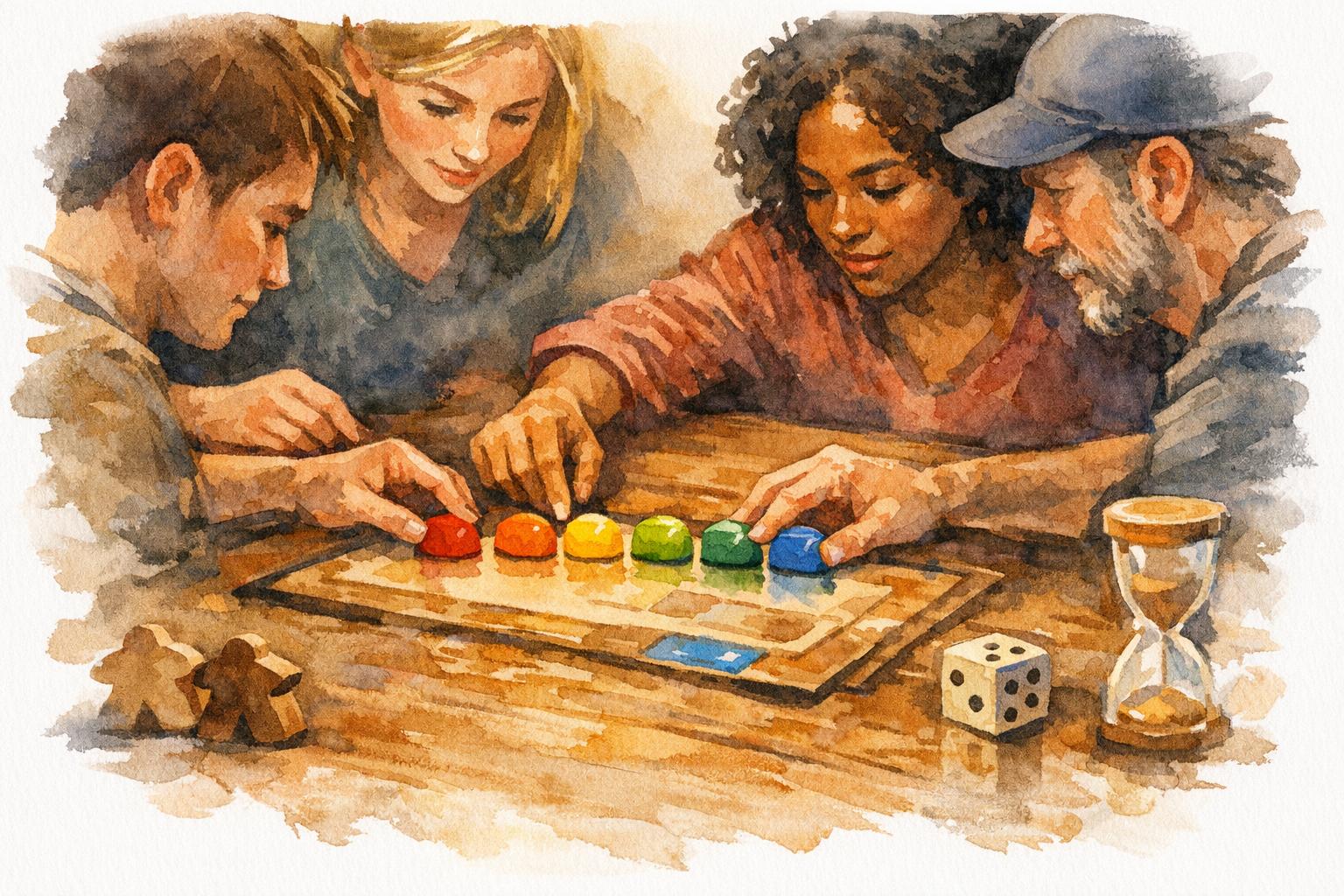
Team goals in tabletop games make gameplay smoother, more engaging, and collaborative. Without clear objectives, teams often struggle with coordination and focus. Here’s how to set effective goals:
- Be Specific and Measurable: Clear, quantifiable goals like “collect 10 resources in 5 turns” ensure everyone knows what success looks like.
- Align with Game Objectives: Connect team goals to the main game objective, ensuring individual efforts contribute to the bigger picture.
- Balance Short-Term and Long-Term Goals: Combine immediate tasks (e.g., “repair walls in 2 turns”) with broader strategies (e.g., “build a siege weapon by round 5”).
- Challenge Without Overwhelming: Goals should push players but remain achievable based on the team’s skill level.
- Review and Adjust Regularly: Reassess goals during natural pauses to adapt to the game’s evolving dynamics.
These strategies enhance teamwork, keep players motivated, and make game nights more enjoyable. Start your next session with clear goals and watch your team’s coordination improve.
5 Essential Tips for Setting Effective Team Goals in Tabletop Games
1. Make Goals Specific and Measurable
Vague goals can stall progress before anything meaningful even happens. If a team’s objective is simply to “collect resources” or “improve performance”, there’s no clear way to measure success. Setting specific goals eliminates this uncertainty and provides a clear framework for tracking progress.
For instance, instead of saying “gather supplies”, you could set a precise target like “collect 10 wood resources within 5 turns.” This approach follows the SMART framework, making goals Specific, Measurable, Achievable, Relevant, and Time-bound.
David Young, a PI Contributor, puts it perfectly:
“Without a quantifiable way to track progress or determine success, no one will be able to say whether or not a goal has been achieved, which can lead to either confusion or apathy.”
When goals are measurable, they create accountability and a sense of urgency. This ensures that every team member knows what’s expected and contributes accordingly. Regular check-ins against these goals help identify obstacles early, allowing the team to tweak strategies as needed. With clear, specific targets, the entire team can work together more effectively, using shared benchmarks to define and celebrate success.
sbb-itb-7b84150
2. Align Goals with Team Objectives
To succeed as a team, it’s essential to ensure that everyone’s goals align with the game’s main objective. When individual actions clearly connect to the win condition, it keeps everyone focused and reduces wasted effort.
Research highlights that 85% of employees disengage when their goals don’t align with the bigger picture, while only 15% feel engaged when they see how their efforts contribute. In tabletop games, this misalignment often causes players to chase personal objectives instead of working toward a shared goal. This shows why collaboration in goal-setting is so important.
As Krish Jagirdar, author of Internet Game, puts it:
“When people contribute to the creation of a goal, they’re more likely to work hard to achieve it”.
By involving every team member in the planning process, you create a sense of ownership. This also ensures that everyone understands the purpose behind each goal and how it fits into the overall strategy.
Breaking the main objective into smaller, actionable tasks for each player is another effective approach. For example, if the team’s mission is to defend a fortress, specific tasks could include “scout enemy positions within 3 turns” or “fortify the north wall by round 5.” These clear assignments eliminate confusion and keep the team strategy on track.
Regular check-ins during the game are also critical. These updates help confirm that current goals align with the overarching objective and allow for quick adjustments if priorities shift. As Lean Agile Intelligence notes:
“When team alignment and common goals are achieved, success is inevitable”.
This level of transparency keeps everyone engaged and prevents players from falling into repetitive, unproductive habits. Aligning goals in this way lays the groundwork for effective team coordination.
3. Balance Short-Term and Long-Term Goals
Balancing short-term tactics with long-term strategies is crucial for keeping teams coordinated and engaged. Focusing too much on one can make gameplay feel predictable or one-dimensional. When teams juggle both immediate and future objectives, it creates a dynamic tension that drives decision-making and keeps everyone invested in the outcome. This approach also complements the specific and aligned goals discussed earlier.
Take a fortress defense scenario as an example. Short-term goals might involve addressing immediate threats - like repairing damaged walls within two turns - while long-term goals focus on overall victory, such as gathering resources to build a siege weapon for a decisive assault. As Vicky Pham, Marketer at Quire, puts it:
“Short-term wins make long-term goals feel more attainable. They provide quick feedback and allow teams to adjust their approach if something isn’t working”.
Think of it like climbing a mountain: reaching the next milestone keeps you moving steadily toward the summit. This balance forces teams to make tough decisions about resource allocation. Should they use limited actions to neutralize an immediate threat, or invest those resources in achieving a larger objective? These decisions add variety to gameplay and encourage players to refine their strategies over multiple sessions.
To apply this effectively, assign team roles based on priorities. Some members can focus on handling immediate crises, while others work on long-term objectives like “securing the temple entrance by round 3” or “unlocking the vault door by round 6.” These smaller victories build momentum and make the ultimate goal feel more achievable, fostering better collaboration among players.
During gameplay, schedule quick check-ins to assess how well short-term and long-term goals are balanced. This allows the team to pivot if new challenges arise, ensuring that immediate wins don’t overshadow the broader strategy for success.
4. Set Challenging yet Achievable Goals
Finding the sweet spot between challenge and achievability is key in tabletop gaming. Goals that are too simple can feel pointless, while overly ambitious ones might crush motivation before the game even begins. To strike this balance, consider your team’s skill level and the game’s mechanics when setting objectives.
Start by evaluating your team’s capabilities. Think about their experience, familiarity with the game, and how they’ve handled challenges in the past. For instance, experienced players might thrive on complex objectives like “secure three artifact pieces while defending two locations”, while newer players might need a simpler task, such as “retrieve the artifact from the central chamber within five rounds.”
The SMART framework is helpful, especially the “Achievable” and “Time-bound” aspects. As The Predictive Index points out:
“Unrealistic or irrelevant goals that fail to align with individual talents can demoralize your team. Ultimately, poorly set goals can do more harm than good”.
Deadlines should create urgency without making success feel impossible. For example, if your team needs to escape a dungeon, giving them eight turns instead of four could turn a frustrating task into an engaging challenge. However, flexibility is just as important. Be prepared to adjust deadlines or objectives if the difficulty feels off.
Adapt as needed during gameplay. The Predictive Index highlights that:
“the mile markers for your goals may need to be adjusted”.
If things aren’t going as planned, modify sub-goals to keep the team motivated. A visual tracker can be a great tool here, offering transparency and showing that success is still within reach, even if the path changes.
Finally, ensure your team feels invested in the goals. Once objectives are set or adjusted, take the time to clarify roles and responsibilities. Team buy-in is crucial. Explain the plan clearly and invite feedback to confirm that the goal feels doable. When everyone understands their part and believes in the group’s ability to succeed, even tough challenges can feel invigorating instead of overwhelming.
5. Review and Adjust Goals Regularly
Goals aren’t set in stone - they should evolve as circumstances change. As Krish Jagirdar, author of Internet Game, explains:
“Things change, and so should your goals. Regularly check in on your objectives and adjust them as necessary.”
In tabletop games, the unexpected is part of the fun. A surprise attack, an unusually lucky dice roll, or even running low on resources can completely shift the course of play. Regularly revisiting your goals ensures your team stays in sync with these twists and turns.
The ideal time to reassess goals is during natural pauses in gameplay. For example, phases like upkeep or breaks in the action provide perfect opportunities to evaluate your strategy and make adjustments. Taking this time helps your team stay coordinated and ready for whatever comes next.
Involve the entire team in these discussions. By encouraging everyone to contribute, you gain diverse insights and foster a stronger sense of shared responsibility. Maybe the rogue notices the treasure vault is more secure than expected, or the healer points out that potions are being used up too quickly. These observations often surface when the team communicates openly during check-ins.
Tracking progress is another key aspect. Setting clear checkpoints or smaller goals along the way helps measure how far you’ve come. As Jagirdar puts it:
“If you can’t measure your progress, how do you know you’re actually progressing?”
Falling short of milestones can signal the need for a course correction, while hitting goals early might be a sign to aim higher.
And don’t forget to celebrate the little victories. Acknowledging small wins during these check-ins not only reinforces progress but also keeps morale high, keeping everyone motivated to tackle the next challenge.
Conclusion
Team goals that are specific, aligned, balanced, challenging, and flexible can elevate gameplay by improving coordination and focus.
When these principles come together, they create a more engaging and enjoyable experience. Teams with well-structured goals report up to 35% higher completion rates and 28% greater satisfaction, with games like Gloomhaven showing a 40% increase in immersive sessions.
The real game-changer is making goal-setting a natural part of your routine. At the start of your next session, agree on one clear objective as a team. Use natural breaks in the game to check your progress, and don’t forget to celebrate small wins along the way. These simple steps can transform an ordinary game night into something extraordinary.
Try these tips during your next session - make goals specific, align them with your team’s strengths, balance immediate wins with long-term strategies, keep them realistic, and revisit them regularly. You might just find that your tabletop adventures become even more rewarding.
For games that emphasize teamwork and storytelling, explore MINIFINITI’s collection, including titles like Red Tape. This game combines humor and strategy, encouraging players to work together toward shared goals. With its thematic game design, it turns game nights into memorable adventures filled with decision-making and character development.
FAQs
How do we pick one team goal fast before a session starts?
To pick a team goal quickly before a session, aim for something clear, specific, and achievable that aligns with the team’s shared interests and the session’s purpose. Narrow down the options to just a few well-defined choices, have a brief discussion, and settle on one that feels both motivating and realistic. This way, the team starts off aligned and ready to work together effectively during gameplay.
What if players disagree on the team’s main objective mid-game?
If players find themselves clashing over the team’s main objective during a game, it’s a good idea to pause for a moment. Use this time to clarify any confusion and agree on a shared goal. Open communication and trust play a huge role in settling disagreements. Taking the time to balance roles and align objectives before the game even starts can help avoid these conflicts altogether. When everyone is on the same page, the game remains fun and collaborative for all.
How can we track team-goal progress without slowing the game down?
To keep track of team-goal progress without disrupting the game, use quick visual updates or simple tools like tokens or charts. These approaches let everyone stay informed while keeping the gameplay smooth. The key is to choose methods that are easy to update and unobtrusive, so players stay engaged and the fun continues uninterrupted.