
Game Talk
10 Questions to Ask During Playtesting
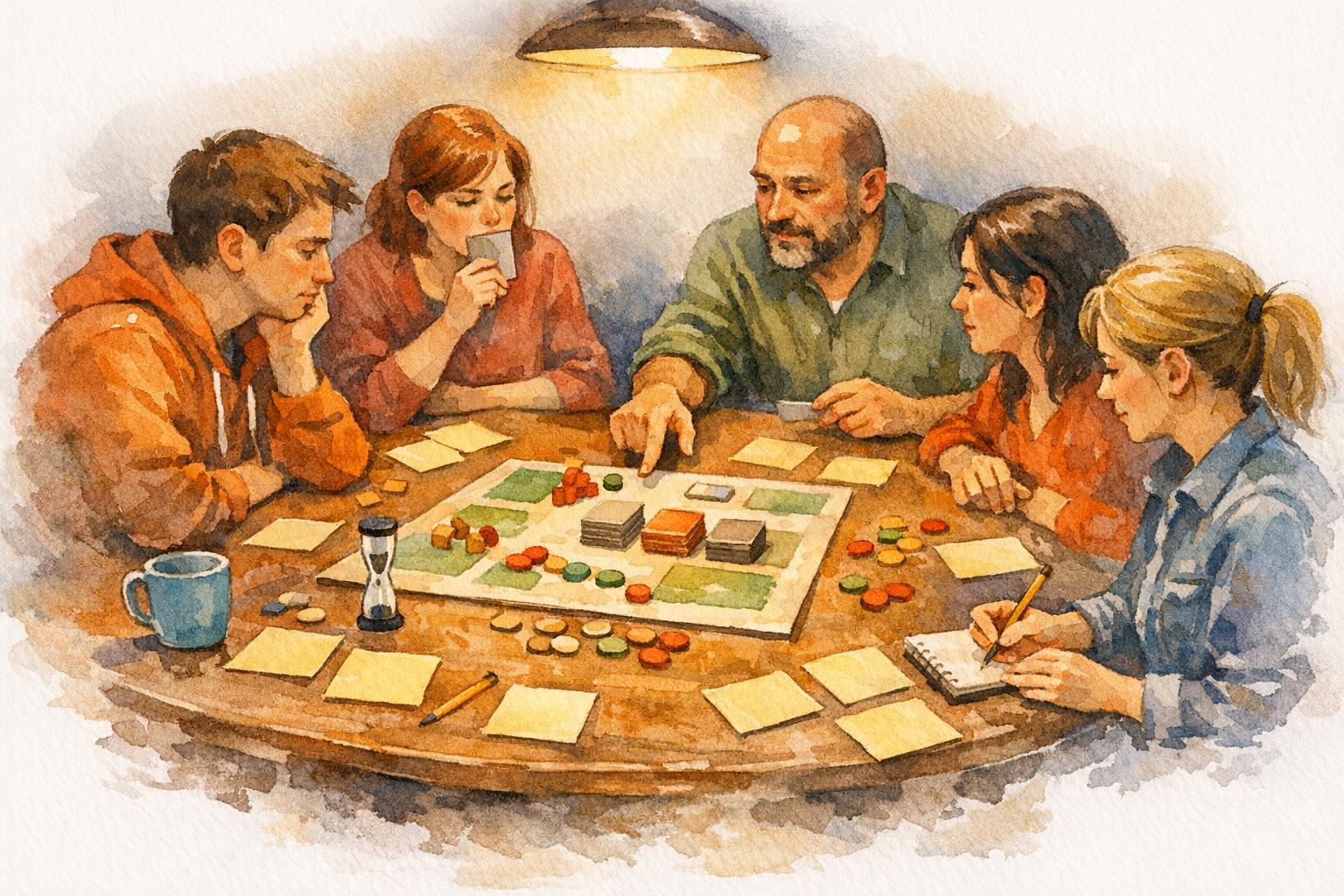
Playtesting is the key to understanding how players experience your game. The right questions can expose issues with mechanics, pacing, and clarity - helping you refine your design. Here’s a quick look at 10 key questions to ask during playtesting:
- What did you like most about the game?
Identify strengths and design for replayability by highlighting features players enjoy. - What could be improved?
Pinpoint weak areas, like balance or confusing mechanics. - Did the game feel too short, too long, or just right?
Assess pacing and session length. - How likely are you to recommend this game to a friend?
Gauge its appeal and word-of-mouth potential. - Did you feel like you were making friends or enemies with other players?
Understand the social dynamics your game creates. - Tell me about your learning process.
Evaluate how intuitive your game’s mechanics and instructions are. - Were there any boring, frustrating, or time-consuming areas?
Highlight problem spots that detract from the experience. - Did the game’s core mechanic feel entertaining?
Determine if the main gameplay loop is engaging. - What questions or confusion did you have during play?
Spot unclear rules or mechanics. - What would you change if you could?
Gather unfiltered feedback on potential improvements.
These questions help you collect actionable feedback to fine-tune your game for a better player experience. Observing behavior, encouraging honesty, and avoiding leading questions are just as important as the questions themselves.
10 Essential Playtesting Questions for Game Designers
Tabletop Game Prototyping, Playtesting, and Development
sbb-itb-7b84150
1. What Did You Like Most About the Game?
Start by focusing on what players enjoyed most - it’s a great way to uncover the game’s biggest strengths. This question aligns with the “Favorite” part of the ffwwdd mnemonic (Frustrating, Favorite, Wanted, Wand, Doing, Describe), a method designers use to gather authentic player feedback.
Shawn Patton, Senior Designer at Schell Games, emphasizes the value of asking directly:
“What was your favorite moment or aspect of what you just played?”
This kind of open-ended question helps players naturally highlight standout features, whether it’s a specific mechanic, interaction, or an immersive moment that stuck with them.
Another way to kick things off is by asking, “What were your first thoughts?” This allows players to freely share what stood out to them. For example, if someone mentions a combat system or a particular power-up, you’ve likely pinpointed a key strength. Chris Backe from Entro Games suggests digging deeper by asking:
“What moments were the most fun? What moments felt like work, or were boring?”
This contrast can help you separate what players genuinely enjoy from areas that might need improvement.
Also, pay close attention to how players describe game mechanics. If they’ve come up with their own nickname for something - like calling an energy system “the lightning bolts” - it’s a sign that the feature resonates with them. Using their language in follow-up questions keeps the conversation natural and avoids steering them toward your intended terminology.
Finally, don’t overlook non-verbal cues like smiles or body language. These subtle reactions can reveal what players find engaging, even if they don’t express it directly. Understanding what they love most helps refine the game’s strengths for future iterations.
2. What Could Be Improved?
Once you’ve pinpointed what players enjoyed, it’s time to dig into areas that need work. This step helps uncover balance problems, overly complex mechanics, and design choices that disrupt gameplay. As Chris Backe from Making Games advises, it’s essential to ask directly:
“What felt balanced or unbalanced? (Remember we’re focusing on feelings here, not the raw math of things.)”
Imbalance often reveals itself through frustration - maybe it’s an overpowered weapon, an impossibly tough trap, or a strategy that dominates all others. In multiplayer games, it’s smart to ask if players noticed any first-player or last-player advantages, as turn-order bias can lead to a sense of unfairness. Similarly, unused mechanics should raise a red flag - they often point to poor integration or a lack of relevance.
It’s also worth evaluating the physical components and layout. Watch how players interact with cards, boards, or other materials. If they skip instructions or struggle with setup, it might signal that the design is too complicated. Asking testers about missing information on player aids or reference cards can also uncover moments where the game feels tedious or forces players to keep flipping through the rulebook.
These insights go beyond raw data and numbers - they’re about understanding the players’ personal experiences. Sometimes, players blame confusing mechanics on their own abilities rather than the game itself. For instance, if someone says, “Kids might find this hard”, try following up with, “How was it for you?” to get a clearer sense of their own challenges. Jozef Kulik from Game Developer emphasizes the importance of creating a relaxed environment for feedback:
“We didn’t make the game, and it doesn’t matter to us whether you love it, or hate it. We just want you to be honest about your experience.”
Another helpful approach is the “Magic Wand” technique. Shawn Patton, Senior Designer at Schell Games, suggests asking players:
“If you had a magic wand to wave, and you could change, add, or remove anything from the experience, what would it be?”
This kind of open-ended question often leads to creative and unexpected insights.
3. Did the Game Feel Too Short, Too Long, or Just Right?
Pacing can make or break a game. If a session drags on or ends too quickly, players can walk away feeling unsatisfied. Chris Backe from Making Games suggests a straightforward approach: “How long did the game feel (too short, too long, just right)?”. This question helps identify whether the game’s actual duration matches the player’s perception. The next step? Compare how players’ subjective experiences align with the session’s real timing.
It’s crucial to balance feelings with facts. Record the actual session length and compare it to how players describe the experience. For instance, a 30-minute game that feels like an hour could signal pacing problems. For longer playtests - those over 45 minutes - players might struggle to recall exactly when pacing issues arose. To address this, user researcher Jozef Kulik recommends breaking sessions into smaller segments and conducting mini-interviews during the test:
“Preparing mini-interviews that the researcher can employ throughout the session can be an effective way of ensuring that the interview process places less emphasis on the players ability to recall”.
Another key insight comes from observing when players naturally decide to stop. Shawn Patton, Senior Designer at Schell Games, highlights the importance of tracking these moments:
“Always make it clear at the beginning that they can play for as long or as short as they’d like. (If they want to quit out, that’s great data! Keep a record of where and when it happened!)”.
When a player quits early, note the exact point - it often reveals where the game’s momentum faltered.
Finally, ask players to pinpoint moments that felt like a chore or were outright boring. Non-verbal cues like sighs, fidgeting, or distracted behavior can also hint at pacing problems, even before players articulate them.
4. How Likely Are You to Recommend This Game to a Friend?
Once you’ve explored what players enjoy, what they’d tweak, and how the game flows, it’s time to measure something just as crucial: its recommendation potential. This question gets straight to the heart of your game’s ability to generate buzz. As board game entrepreneur Jackson Pope puts it, a truly recommendable game is one that players can’t wait to share and revisit. If your playtesters aren’t eager to recommend it, that’s a sign of a deeper issue that needs attention.
To dig deeper, follow up by asking playtesters how they’d describe your game to others. If their explanation doesn’t align with your vision or they struggle to summarize it in a single sentence, that’s a big clue something’s off. A game’s word-of-mouth appeal often hinges on how easy it is for players to explain and sell the experience to their friends.
Reflect on whether the game’s balance and pacing make it something players want to share. What’s driving their enthusiasm - or holding it back? Asking them to pinpoint one thing they’d change can reveal the biggest obstacle to a recommendation. Players are more likely to recommend games that are engaging and minimize downtime .
Finally, consider accessibility. Design elements like color-blind-friendly features or reducing cognitive overload can make a huge difference. A game that hardcore strategy fans love might still alienate casual players, and that’s valuable feedback to refine its appeal.
5. Did You Feel Like You Were Making Friends or Enemies With Other Players?
A game’s social dynamics play a huge role in shaping the overall experience. This question digs into how players connect with each other during gameplay. Are they teaming up, building trust, or turning on each other? Their responses can reveal whether your design choices are hitting the mark. For instance, if you intended to create a cooperative puzzle game but players leave feeling like they were “making enemies”, it’s a sign that something in the design isn’t aligning with your intent. This feedback, combined with insights on mechanics and pacing, provides a clearer understanding of how players are truly experiencing your game.
Shawn Patton, Senior Designer at Schell Games, highlights the importance of player descriptions:
“If they describe your game as a puzzle game and you thought you were making a story game - where is the disconnect?”
If players are leaning into competition rather than collaboration, it’s worth examining whether your mechanics are unintentionally encouraging rivalry.
To get to the root of these dynamics, start with open-ended questions like, “Tell me about your experience with the other players”. Game designer Chris Backe suggests a follow-up to dig deeper:
“What brought those emotions out, the game or another player?”
This helps you figure out if the emotions - whether positive or negative - are driven by the game design or by the players themselves. It’s also a way to assess whether competitive tension is adding to the fun or causing unnecessary frustration.
Pay attention to players who blame themselves for poor interactions. For example, if someone says, “I just couldn’t coordinate with my teammate,” it might not be about their skill level. It could point to unclear feedback or mechanics that make teamwork harder than it should be.
Lastly, non-verbal cues can be just as telling as verbal feedback. Watch for signs of discomfort or tension during play, as these might highlight unspoken friction points. If several players report similar issues, it’s a strong signal that changes to the design may be necessary.
6. Tell Me About Your Learning Process
Understanding how players learn your game is just as important as knowing what worked and what didn’t. It helps you figure out whether your game communicates its core mechanics and objectives effectively. To start, ask a broad question like, “Could you tell me what you had to do in the game?” This allows you to see if players grasped the main goal without any hints or guidance. If their response focuses on side tasks rather than the primary objective, it could signal that your tutorial or onboarding process is sending mixed messages.
Pay attention to how players describe the game’s mechanics. If they rename your systems - like calling your energy system “lightning bolts” instead of its intended name - it might mean your concept isn’t coming through clearly. Jozef Kulik, a blogger and user researcher, highlights the importance of creating a judgment-free space for feedback:
“We didn’t make the game, and it doesn’t matter to us whether you love it, or hate it. We just want you to be honest about your experience.”
After tutorial segments, follow up with questions like, “What do you wish you knew when you started?” This can reveal any gaps in your instructions. If players mention confusion, dig deeper with questions like, “What did you try?” and “How did you expect this to work?” to uncover where things went off track.
Also, watch for instances where players blame themselves. For example, if someone says, “I imagine a younger person might find this confusing,” ask something like, “How was the language for you?” to identify unclear instructions. Consultant Terry Pearce found during playtests of the “Transform Deck” that letting players explore without guidance exposed areas where instructions weren’t intuitive, leading to adjustments that encouraged user discovery.
Finally, avoid asking leading questions. Instead of saying, “Did you not understand the hint?” try something like, “What could have helped you solve this puzzle?” Often, players’ actions and problem-solving attempts reveal more than their words.
7. Were There Any Boring, Frustrating, or Time-Consuming Areas?
This question helps separate the exciting parts of your game from the ones that feel like a chore. Game designer Chris Backe sums it up well:
“What moments were the most fun? What moments felt like work, or were boring?”
Understanding the difference between “fun” and “work” can highlight areas of your game that need adjustment. These insights are key to identifying problems with pacing or mechanics.
Pay attention to moments when playtesters quit early. Note exactly when and why it happens - whether it’s tied to a specific level, mechanic, or task. Shawn Patton, Senior Designer at Schell Games, stresses the importance of this data:
“If they want to quit out, that’s great data! Keep a record of where and when it happened!”
This information is invaluable for refining parts of the game that might be dragging down the overall experience.
Keep in mind, players often underreport their frustrations. Observing their behavior can reveal more than their words. User researcher Jozef Kulik illustrates this perfectly:
“You’ve just watched them struggle to drive a car in a straight line for 45 minutes… and yet the player will tell you that everything was fine.”
Look for signs like skipping instructions, avoiding mechanics, or appearing visibly distracted.
Start with open-ended questions to allow players to express their thoughts freely about specific mechanics. If they don’t mention any issues, you can ask about particular areas, like resource collection, or try the “magic wand” question to uncover tasks that feel unnecessary or inefficient.
Letting moments of silence linger during feedback can encourage players to reflect more deeply on frustrations. If possible, observe from another room - players are often more open about their disengagement when they aren’t trying to impress someone sitting next to them. These observations will help you pinpoint and improve the less enjoyable parts of your game.
8. Did the Game’s Core Mechanic Feel Entertaining?
The core mechanic shapes the entire gaming experience. Just like feedback on game length or balance, understanding how players feel about the core mechanic gives insight into their overall engagement. This question helps you figure out if players genuinely enjoy the main gameplay loop - without steering them toward a specific answer.
Instead of asking something direct like, “Was the core mechanic fun?”, try a more open-ended approach. For example, ask, “What moment best showcased the game’s main challenge or interaction?” This way, players naturally highlight what stood out to them. If they rave about your combat system, it’s a good sign. But if their focus shifts to the music or visuals instead, it might mean the gameplay itself isn’t hitting the mark.
Shawn Patton, Senior Designer at Schell Games, stresses the importance of neutral questioning:
“The goal of post-playtest questions is to get unadulterated feelings from the person. You do not want to lead them in any way, but you want to find out what they thought.”
For instance, instead of asking, “Was the speed boost fun?”, try something like, “What power-ups do you remember? Describe its effect.” This approach shows whether the mechanic left a memorable impression on players.
Pay close attention to how players describe your game. Ask something like, “How would you explain the game’s key action or strategy to a friend?” Their response can reveal a lot. As Patton points out:
“If they describe your game as a puzzle game and you thought you were making a story game - where is the disconnect?”
This kind of mismatch could indicate that your intended experience isn’t coming through clearly. Another helpful question is, “What were you doing in the experience?” This can uncover whether players were engaged with the core mechanic or distracted by secondary tasks. For example, if you designed a strategy game but players say they spent most of their time “just collecting resources”, it’s worth rethinking how compelling the core gameplay feels.
These insights into the core mechanic provide a foundation for exploring other aspects of player engagement in later questions.
9. What Questions or Confusion Did You Have During Play?
Sometimes, players blame themselves for their confusion, even when the real issue lies in the game’s design. As Jozef Kulik, a blogger and game developer, explains:
“It’s common that you’ll observe players struggling with a particular feature… yet the player will tell you that everything was fine.”
This insight highlights the importance of asking clear, step-by-step questions to uncover hidden problems.
When a player seeks help during playtesting, resist the urge to immediately provide answers. Instead, try asking something like, “What do you think you should do with that laser?” This approach sheds light on their thought process and can reveal gaps in the game’s instructions.
Begin with broad questions, such as, “What did you have to do in the game?” If their response skips over key mechanics, follow up with more targeted queries. For instance, if they don’t mention the stamina bar, you might ask, “Was there anything else, like the health bar, that you needed to be aware of?” This helps you figure out whether they noticed the mechanic but ignored it, or if they missed it entirely.
Finally, give players a moment to process their thoughts after they answer. A brief pause can prompt them to recall other areas of confusion they might not have mentioned right away.
10. What Would You Change If You Could?
Asking, “What would you change if you could?” opens the door to honest and unfiltered feedback. Shawn Patton, Senior Designer at Schell Games, suggests phrasing it like this:
“Imagine you could instantly modify any aspect of the game - what would you adjust?”
This approach eliminates constraints, encouraging players to share their genuine thoughts. Pay attention to the differences between initial frustrations and the changes they propose. For instance, a player might complain about a tricky puzzle but then suggest revamping the combat system. This could reveal that the real issue lies in the combat design, not just the puzzle’s difficulty. Such observations build on earlier discussions about the disconnect between player frustrations and design intent.
If testers suggest changes for others, follow up with, “How was it for you?” This redirects the focus to their personal experience. When players offer suggestions, ask, “How did you expect this to work?” to uncover gaps between their intuition and the game’s design.
Encourage candid feedback by reminding testers, “It’s just a demo.” This reassurance often leads to more direct and constructive criticism.
Lastly, embrace moments of silence after a response. These pauses give players time to reflect and recall smaller details they might have overlooked, often leading to valuable insights for improvement.
These strategies provide a strong foundation for gathering more actionable playtesting feedback.
How to Get Better Playtesting Feedback
Refining your playtesting techniques can significantly improve the quality of feedback you receive. While asking thoughtful questions is essential, the way you conduct your sessions plays a huge role in whether testers feel comfortable giving honest opinions or simply offering polite responses. It’s worth noting that face-to-face feedback often tends to be less candid than anonymous input.
Start by creating an environment where testers feel safe to share critical feedback. Make it clear that the session is about improving the game, not judging their skills. Jozef Kulik from Player Research highlights this approach perfectly:
“We didn’t make the game, and it doesn’t matter to us whether you love it, or hate it. We just want you to be honest about your experience.”
When players encounter difficulties, view it as a chance to identify and resolve design issues, rather than seeing it as a reflection of their abilities. Boardssey emphasizes the value of unfiltered feedback:
“The harsher the feedback, the more useful it is to me.”
This mindset helps break through the politeness barrier that often softens critiques.
Pay attention to actions, not just words. Between 2016 and 2018, Mike Hutchinson of Planet Smasher Games spent 18 months playtesting his tabletop game Gaslands. He partnered with The Battlehammer playtest group, who filmed their sessions without any developer input. By analyzing videos from over 300 beta testers, Hutchinson identified unclear rulebook sections based on house rules and assumptions made by players. Non-verbal cues, like checking phones, cracking jokes, or showing signs of low energy, can also highlight moments of disengagement that testers might not mention directly.
Avoid leading questions. Instead of asking, “Was the puzzle too hard?” opt for open-ended questions like, “What did you think of the puzzle?”. This allows you to understand how players naturally interpret your game. A great example of this approach is MINIFINITI, which hosts weekly game nights in a casual, living-room-like setting. This relaxed atmosphere encourages testers to provide honest feedback on games like Red Tape.
For playtesting with friends and family, consider using anonymous written surveys to bypass the “diplomacy filter.” To ensure balanced participation, actively invite quieter testers to share their thoughts so the conversation isn’t dominated by the more vocal participants. When criticism arises, ask follow-up questions to dig deeper into their perspective - without defending your design choices or explaining your intentions.
Conclusion
Targeted playtesting questions turn vague impressions into actionable design insights. As Shawn Patton from Schell Games points out, the aim is to gather genuine player reactions without steering them toward specific answers. Without this focus, you risk missing the real reasons behind players’ unexpected behaviors.
These carefully crafted questions help uncover the underlying causes of player feedback, going beyond surface-level observations. For instance, if a player ignores a mechanic, structured questions can clarify whether they didn’t understand it or consciously chose to avoid it. These insights come from asking open-ended, non-leading questions that allow players to share their unfiltered experiences.
Whether you’re an indie developer testing a paper prototype at home or part of a team like MINIFINITI - known for hosting weekly game nights to refine games like Red Tape - these questions create a playtesting frameworks for gathering meaningful feedback. Terry Pearce, a designer and consultant, highlights this importance:
“Playtests without specific questions in mind get less useful information”.
Use these insights to fine-tune your next playtest. By integrating targeted questions, you’ll uncover trends and address overlooked details. Every piece of feedback sharpens your game, helping you align your design with how players actually experience it.
FAQs
When should I stop a playtest and interview players mid-session?
Stop the playtest at the end of the session or during a natural break to interview players. This timing is key because their reactions are still fresh, and their feedback tends to be more honest and detailed. Take advantage of this moment to ask questions while they’re reflecting on the experience or chatting with others about the game. This approach helps you collect clear and actionable insights.
How do I get honest feedback without leading the playtester?
To get genuine feedback, it’s important to ask open-ended, neutral questions that don’t lead respondents toward specific answers. Here are a few examples:
- “What was the most frustrating moment?”
- “What was your favorite part?”
- “Was there anything you wanted to do but couldn’t?”
By centering the conversation on their experiences and steering clear of questions that confirm your own assumptions, you’re more likely to collect feedback that’s both honest and useful.
What should I track besides players’ answers?
During playtesting, don’t just rely on players’ answers - pay close attention to their behavior and interactions. Watch how they move through the game, their reactions to different moments, and any difficulties they encounter. These observations can reveal usability problems, unintended gameplay behaviors, and even group dynamics, offering a more complete picture of how players experience your game.