
Game Talk
5 Playtesting Tips for Group Dynamics
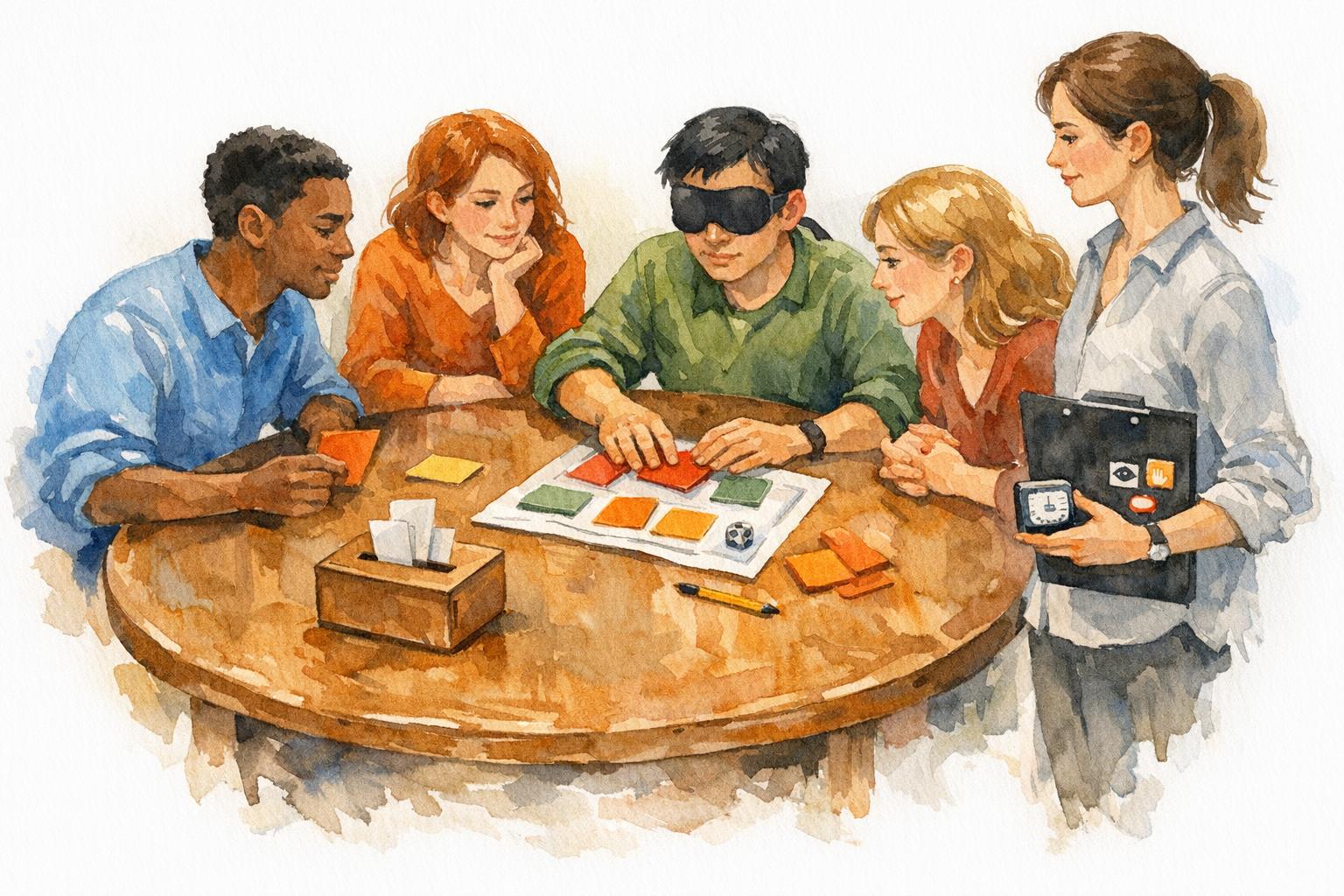
Playtesting isn’t just about refining rules - it’s about understanding how players interact as a group. Social dynamics can make or break a game. This guide highlights five key tips to improve group playtesting and ensure your game keeps players engaged:
- Diverse Testers: Include players of different skill levels, ages, and backgrounds. A mix of 70% newcomers and 30% experienced players works best.
- Prevent Groupthink: Collect individual feedback before group discussions. Anonymous surveys and blind tests help avoid biased responses.
- Structured Sessions: Set clear schedules and use neutral moderators to keep sessions productive and focused.
- Watch Social Cues: Track behaviors like phone-checking or disengagement to identify problem areas in gameplay.
- Blind Tests: Let players use only the rulebook without guidance to uncover unclear rules and natural interactions.
These strategies help you identify weak spots, refine your game, and create an engaging experience for all players.
5 Playtesting Tips for Group Dynamics with Key Statistics
5 Steps to Getting Honest Playtest Feedback - Board Game Design Time
sbb-itb-7b84150
1. Include Different Types of Players for Better Feedback
Relying on a single type of playtester creates blind spots. When everyone in your test group shares similar gaming experiences or skill levels, it’s easy to overlook issues that someone with a fresh perspective might catch. In fact, games tested with diverse groups show a 25% boost in engagement rates. Different players notice different problems.
A good balance of skill levels is also key. The ideal mix? Around 70% newcomers and 30% experienced players. New players help you see if the game is intuitive during those crucial first 15 minutes, while veterans dig into the deeper mechanics and uncover balance issues that only emerge after multiple rounds. 63% of experienced players identify rule complexity issues, while beginners are better at flagging steep learning curves.
But skill isn’t the only factor to consider. Age, gender, play style preferences, and even background all influence how someone experiences a game. For example, testing with players of different ages can improve overall user experience by 34%, and 52% of players prefer games that cater to a variety of play styles. A casual player looking for a fun, social experience will have completely different expectations than someone focused on strategy, which is why designing for replayability requires balancing these diverse needs. By including a mix of testers, you’ll not only get richer feedback but also better simulate real-world gameplay dynamics.
The International Game Developers Association suggests aiming for at least 30% representation from groups traditionally underrepresented in gaming. This isn’t just about inclusivity - it’s about creating better games. Projects that incorporate diverse input see a 30% increase in user satisfaction. Different perspectives bring fresh ideas and problem-solving approaches, making your game more engaging for a wider audience.
To find testers, tap into local gaming clubs, Reddit threads, Discord servers, and community groups. Rotate your testing pool every 2–4 weeks to keep the feedback fresh. The bottom line? If your game is meant for everyone, it needs to be tested by everyone.
2. Reduce Groupthink and Observer Interference
When you bring playtesters together in a room, social dynamics can quickly skew the feedback you receive. People often feel pressured to be polite or align with the loudest voice in the group, which can water down their critiques. In fact, the gap in honesty between face-to-face feedback and anonymous written surveys can be striking - up to three or four levels of candor wider.
To counteract this, gather individual feedback before any group discussion begins. You can hand out anonymous surveys right after gameplay or privately ask each player questions like, “What was the weakest part of the game?” This method ensures that quieter participants aren’t overshadowed by more dominant voices. Some studios have even embraced real-time sentiment tracking to capture unfiltered reactions. For instance, between 2004 and 2007, Microsoft researchers Randy Pagulayan and Jaime Griesemer implemented a mid-game feedback tool for Halo 2 and Halo 3. This system paused the game every three minutes to prompt players with questions like “Too easy” or “Too hard, I keep getting killed.” By collecting immediate, individual responses, they avoided the pitfalls of groupthink and memory loss.
Another factor to consider is the designer’s presence, which can unintentionally influence player feedback. To avoid this, stay out of sight during playtests. If players have questions, respond with something like, “What do you understand from the rules?” Or better yet, conduct blind tests by providing only the rulebook and leaving the room . Recording sessions is another effective way to observe natural behavior without interfering. John Hopson, during his work on Shadow Complex, created a separate application that allowed players to log feedback such as “Lost”, “Bored”, “Confused”, or “Hard”, along with typed comments. This data was then synced with in-game coordinates, pinpointing exactly where issues arose - no group debrief required.
Similarly, Bungie’s research team, led by Roy Cole, took a creative approach for Destiny 1 between 2014 and 2016. They built custom button boxes using scavenged Xbox 360 circuit boards and arcade buttons. These devices let players log emotional reactions instantly and privately during shared gameplay sessions.
“When someone tells you there is a problem with your game, they are almost always right. When someone tells you how to fix that problem, they are almost always wrong.” - Neil Gaiman & Robin D. Laws
The key takeaway? Pay attention to where players struggle, but don’t feel obligated to adopt their suggested solutions. Often, identifying the problem is more valuable than the proposed fix.
3. Use Clear Schedules and Moderation
Without a structured plan, playtesting sessions can spiral into chaos. Setting a clear schedule upfront helps participants stay focused and reduces any uncertainty they may feel. When players know the plan - like a 2–3 hour session on a Saturday or a focused 90-minute test during lunch - they tend to relax and provide more genuine feedback. Sending reminders a week and a day before the session can boost attendance by as much as 40%. A well-defined schedule also sets the stage for smooth moderation later.
Managing time effectively is just as important. Most general gameplay sessions and group dynamics tests work best when kept to 2–3 hours, while targeted feature tests should stay within 1.5–2 hours. Going beyond these timeframes can lead to player fatigue, which reduces the quality of their feedback.
Once time is under control, active moderation becomes the key to keeping things on track. A neutral moderator - someone not directly involved in the game’s development - should oversee the session. Their role is to guide conversations, mediate disagreements, and ensure every participant has a chance to share their thoughts. As user research expert Steve Bromley notes:
By setting expectations at the start of the session about what’s going to happen, and what’s expected from them, players can start to feel at ease, feel more comfortable sharing their opinions and display more natural behavior.
Moderators should watch for natural pauses in gameplay to ask questions, avoiding interruptions during intense moments.
To avoid getting overwhelmed and to ensure all insights are captured, assign someone as a Timekeeper and another as a Note-taker. Groups that try to tackle more than three main issues at once often see a 60% drop in actionable insights.
A helpful way to structure feedback discussions is by using the “sandwich method.” Start with a positive comment, follow it with constructive criticism, and then wrap up with another positive observation. This approach can make developers 70% more open to receiving feedback.
4. Track Social Metrics During Sessions
Watching how players behave during a game can reveal insights that words alone might miss. During playtesting, physical and emotional cues often show when a group is fully engaged - or when their interest starts to fade. For instance, players leaning forward and actively discussing strategies during others’ turns? That’s a sign of high engagement. On the flip side, when players start checking their phones or chatting about unrelated topics, it usually signals that the game has lost their attention. These observations lay the groundwork for understanding group dynamics.
Mike from Planet Smasher Games emphasizes the importance of picking up on these real-time signals:
You should always be on the lookout for moments of no-fun. The moments where the energy drops around the table. Maybe one player is fiddling around with some part of the system, and the other players have no stake in it.
A player checking their phone is a particularly strong indicator of disconnection. It often means the game’s flow has stalled, or the player feels detached from the action. Another key moment to watch for is when players show excitement - like their eyes lighting up - followed by visible disappointment. This often points to a gap between their expectations and the actual gameplay. These types of observations provide a solid foundation for the deeper discussions that come after the session.
When it’s time for the post-session debrief, structure your questions thoughtfully. Avoid broad questions like, “Did you enjoy it?” Instead, go for specifics: “Was there a turn where you felt like you didn’t have any good options?” This targeted approach tends to produce 30% more useful feedback. Anonymous written surveys can also help gather honest opinions that players might hesitate to share out loud.
To identify patterns, keep track of recurring feedback in a spreadsheet. For example, note issues like “rules confusion”, “pacing problems”, or “social misalignment”. If the same problems crop up across multiple groups, it’s a clear signal that a design element needs rethinking.
5. Run Blind Tests to Observe Natural Interactions
Blind tests are a powerful way to see how players naturally interact with your game, free from designer influence. The process is straightforward: hand players the rulebook and game components, then step back. No explanations, no coaching, no safety net. This method helps avoid what’s commonly called the “Mom Test” - where people give overly positive feedback just to spare your feelings.
Mike Hutchinson, the creator of Gaslands, relied on this method during the game’s 18-month development. A group called “The Battlehammer” recorded their beta play sessions, including scenarios like “death race” and “defend the rig”, while Hutchinson stayed out of the room. Watching these videos gave him invaluable insights. Players made assumptions, created house rules, and exposed which parts of the game were unclear. As Hutchinson put it, these sessions were “highly revealing, showing which rules remain unclear”.
To get the most out of blind tests, stay silent during gameplay. If players ask questions, respond with, “What do you understand from the rules?” Their confusion will highlight weak points in your rulebook. Pay close attention to micro-hesitations, confused looks, or moments when players check their phones - these are signs of friction. If, after playing, the group can’t clearly explain what the game is about or who it’s for, you’ve identified a major issue with your game’s positioning.
Recording these sessions is especially useful for spotting subtle social cues you might miss in real time. Set a clear goal: your game should pass three consecutive blind tests with different groups before you consider the rules polished. This method not only reveals natural player behavior but also strengthens your understanding of how the game truly functions in the hands of others.
Conclusion
Playtesting for group dynamics sheds light on how players interact, communicate, and stay engaged. By using the five outlined tips, you can strengthen the social aspects of your game: bringing in diverse player groups uncovers overlooked issues, avoiding groupthink ensures honest feedback, clear scheduling keeps sessions on track, tracking social metrics identifies energy shifts, and blind tests reveal authentic player behavior.
The effectiveness of this approach is backed by results. These methods lead to higher satisfaction, more candid evaluations, and better-quality feedback - turning games from mechanically functional to socially engaging.
MINIFINITI, creators of games like Red Tape that mix humor with strategy, incorporates these practices in their weekly game nights. By observing player interactions - like checking phones, side conversations, or moments of genuine excitement - designers tweak game mechanics to encourage stronger social connections. The aim is to craft games where players lean in, discuss their options, and stay engaged, even when it’s not their turn.
“When someone tells you there is problem with your game, they are almost always right. When someone tells you how to fix that problem, they are almost always wrong.”
- Mike, Game Designer, Planet Smasher Games
Your job is to watch for moments of social tension and identify where the group experience falters. Consistently applying these strategies helps create games that bring people together and deliver unforgettable, immersive experiences.
FAQs
How do I find a diverse mix of playtesters fast?
To gather a wide range of playtesters quickly, tap into existing communities and focus on targeted outreach. For example, you can post on platforms like Reddit’s r/playtesting or connect with your followers on social media. Another effective tactic is to set up a referral system, encouraging testers to invite their friends. If you’re looking for specific demographics, hyper-targeted ads on platforms such as Meta or YouTube can help you reach the right audience. These approaches can help you build a diverse and efficient playtesting group.
What’s the easiest way to stop groupthink in feedback?
To steer clear of groupthink during playtesting, it’s important to create a space where players feel at ease sharing their genuine thoughts. One way to do this is by using structured methods like questionnaires or scenario-based testing to collect a range of viewpoints. When providing positive feedback, be clear and specific, so players know what worked well. For negative feedback, ask follow-up questions to dig deeper and fully understand their concerns. These approaches ensure no single voice dominates the discussion and encourage more thoughtful, balanced insights.
How do I run a blind playtest without helping players?
To conduct a blind playtest, hand over your game to players without offering any instructions or guidance. Your role is to observe how they interact with it entirely on their own. Pay close attention to moments of confusion or difficulty - these are key indicators of unclear rules or mechanics that might not feel intuitive.
During the playtest, remain silent. Resist the urge to explain or clarify anything, even if players struggle. Instead, focus on taking detailed notes about their experience. This will help you identify areas that need adjustments or improvements. The ultimate goal? To ensure your game is easy to understand and enjoyable without requiring outside explanations.