
Game Talk
How First-Time Creators Launch Tabletop Games
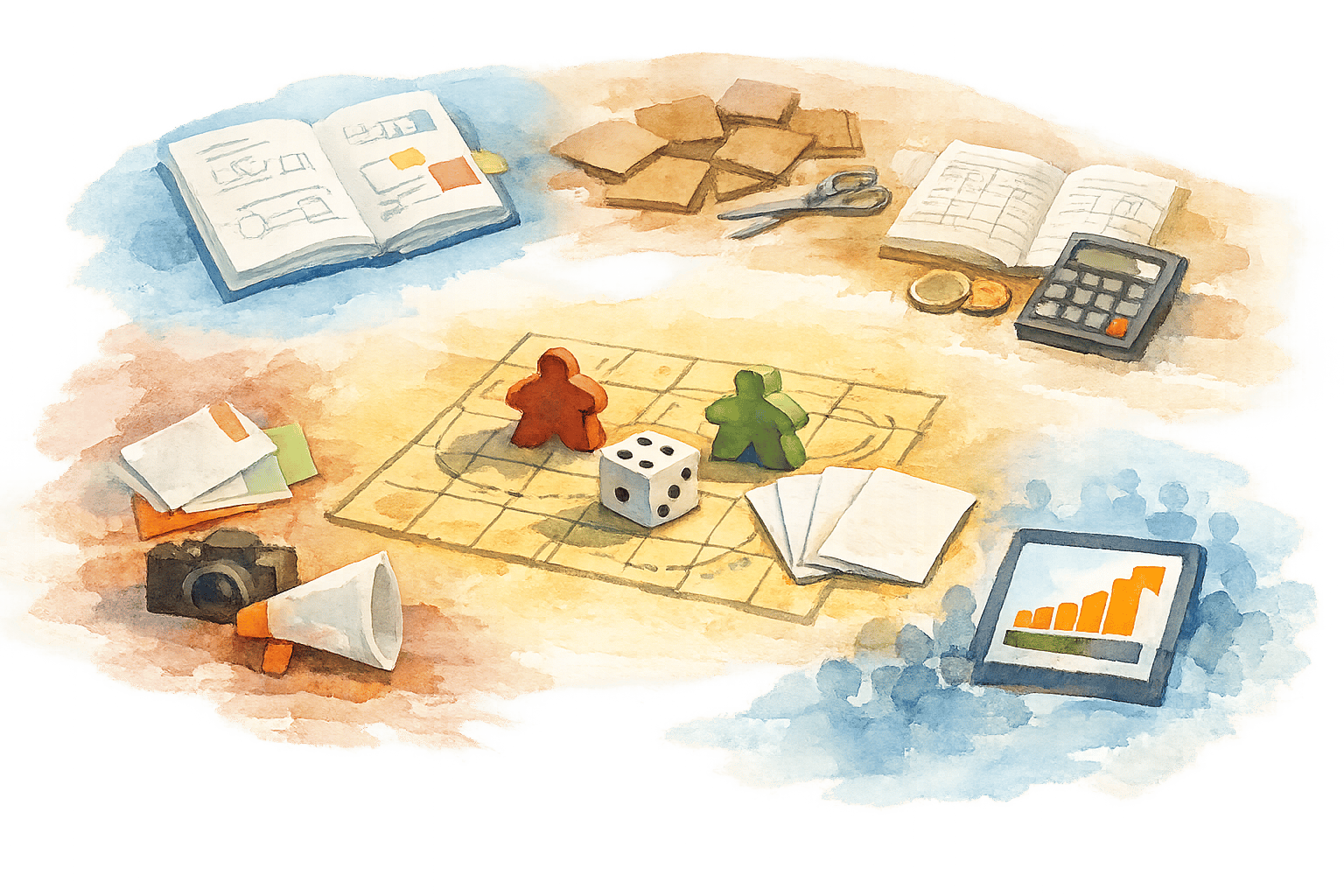
Launching a tabletop game as a first-time creator is more achievable than ever, but it requires careful planning and execution. Crowdfunding platforms like Kickstarter and Gamefound have made the process accessible, with Kickstarter boasting an 80% success rate for tabletop projects in 2024. However, success depends on more than just a good idea - it requires understanding your audience, managing costs, and building a community.
Key Takeaways:
- Market Growth: The tabletop gaming market was valued at $19.5–$25.1 billion in 2024, projected to exceed $34 billion by 2030.
- Crowdfunding Stats: Kickstarter raised $185.4 million for 3,200 board game projects in 2024, while Gamefound added $85 million with $71 million from late pledges.
- Preparation: Build an email list of at least 1,000 subscribers 6–12 months before launch. Engage with communities on Discord, BoardGameGeek, and social media.
- Budgeting: Account for platform fees (8–10%), manufacturing (25–35%), shipping, and a 10–15% contingency fund.
- Prototyping: Start simple, test early, and refine based on player feedback. Blind playtesting is crucial to ensure clarity and functionality.
- Marketing: Focus on visual appeal, clear messaging, and consistent updates. Collaborate with reviewers and influencers to build credibility.
By focusing on research, community engagement, and careful planning, first-time creators can successfully launch their games and stand out in a growing industry.
Tabletop Game Launch Statistics and Budget Breakdown for First-Time Creators
3 Steps to Self-Publish a Tabletop Game
sbb-itb-7b84150
Research and Planning: Building Your Foundation
Before diving into prototyping, it’s critical to understand the landscape you’re stepping into. Successful game launches aren’t just lucky - they’re built on a solid foundation of research. This means knowing your audience, understanding what’s already out there, and figuring out how your concept stands out. By doing this groundwork, you can avoid costly mistakes and ensure your game connects with the right players. The next step? Zero in on exactly who your game is meant for.
Identifying Your Target Audience
Start by defining your target audience and the purpose of your game. Demographics play a big role here. For example, families often prefer games that are simple to learn, while Millennials and Gen Z might lean toward games with strategic depth or immersive storytelling. But don’t stop there - go deeper with psychographics.
Mark Rosewater’s player archetypes provide a handy framework. Timmy/Tammy players are all about big, exciting moments and social fun, while Johnny/Jenny players see games as a way to flex their creativity. Understanding these archetypes can guide both your design and marketing strategies. For instance, a party game likely appeals to Timmy/Tammy players looking for laughs and interaction, while a complex strategy game might attract Johnny/Jenny players who enjoy intricate systems. Knowing who your game is for - and who it isn’t for - helps focus every decision you make, from mechanics to marketing. Once you’ve nailed down your audience, it’s time to evaluate the competition.
Analyzing the Market and Competition
Take a close look at the current market by exploring online communities and visiting local game stores. Play games that are similar to your concept to get a feel for what players expect and what mechanics are common in your chosen genre. This will help you identify market gaps - areas where existing games fall short. For example, maybe games in your category tend to drag on too long, are too complicated for casual players, or lack a unique theme that grabs attention.
As PledgeBox points out:
Board games crowdfunding is not only about proving demand. It’s also about proving that you can execute.
Before investing heavily in artwork or production, test your “Theme Promise” and “Core Loop” with your target audience. Ask yourself: Why would someone choose to back your game instead of sticking with a favorite they already own? Answering this question early on ensures your design process stays focused and relevant.
Developing Your Game Concept
When it comes to generating ideas, look to your own interests or gaps you’ve noticed in existing games. Maybe you’ve observed that deck-building games rarely incorporate area control, or that cooperative games often lack meaningful player conflict. Experiment with merging familiar mechanics in ways that feel fresh.
As you brainstorm, use a design “compass” to keep your development on track. Ask yourself: What kind of player experience are you aiming for? How do your mechanics support that experience? What kind of rewards and challenges will keep players engaged? Dig into older, overlooked mechanics from classic games - sometimes reviving or modernizing these can lead to exciting combinations with current trends.
Finally, validate your concept early by sharing it with trusted players. If your core idea doesn’t spark excitement now, no amount of refinement will save it later. A strong, tested concept at this stage sets the tone for smoother prototyping and production down the line.
Design and Development: Creating Your Prototype
After validating your concept, it’s time to turn that idea into something tangible - a prototype you can test and refine. The aim here isn’t perfection but creating a basic version to evaluate core mechanics and player engagement. As Jamey Stegmaier, founder of Stonemaier Games, explains:
The goal of playtesting and development is to make the game as fun, functional, intuitive, and balanced as possible.
Designing Game Mechanics and Rules
Start by defining the core experience you want players to have. Are you aiming for fast-paced action, deep strategy, or an immersive narrative? This decision will shape the mechanics you create. Begin small with a minimum viable product - if your game will eventually have 100 cards, start with just 10–20 to test the main gameplay loop.
Focus on creating mechanics that involve meaningful decisions. Players should face trade-offs and need to prioritize strategies. For example, Azul (Next Move Games) uses a simple tile-drafting mechanic that leads to complex decision-making, while Wingspan (Stonemaier Games), designed by Elizabeth Hargrave, combines tableau-building with educational themes and visually appealing cards. Stick to a few solid mechanics at first, adding complexity only when necessary.
Draft basic rules that outline the main flow of the game. Don’t worry about edge cases just yet - those can be addressed as you refine the design. Once you have these initial elements, you’re ready to build and test your prototype.
Building and Testing Prototypes
For early prototypes, keep it simple. Use materials like index cards, poker chips, dice, and hand-drawn boards. These low-cost options make it easy to adjust or discard elements that don’t work. When you’re ready for something more durable, use standard materials like 300–350 GSM cardstock and 2 mm thick boards to ensure components hold up during testing.
Start testing internally with friends, family, or experienced players. Pay close attention to their reactions - hesitation, excitement, or confusion can reveal a lot about how the game feels. Document these observations carefully, and if a playtester identifies a game-breaking issue, address it immediately to avoid further disruptions.
Blind playtesting is crucial. In these sessions, players must figure out the game using only your rulebook, without your guidance. Many designers recommend at least three rounds of blind playtesting before moving to production. Each round typically involves five lead testers, each running additional sessions with one to four players.
While digital platforms like Tabletop Simulator are great for quick iterations and remote testing, physical prototypes are still necessary. They help you evaluate how the components feel, how durable they are, and how the game looks on the table. Insights from these tests will guide your next steps in refining the game.
Refining Your Game Based on Feedback
Ask specific questions to gather useful feedback. Instead of asking, “Did you like it?”, try questions like “What rule was the most confusing?” or “When did the game start to feel slow?” Jamey Stegmaier emphasizes the importance of addressing all player questions:
Every question playtesters ask about the rules is important, even if the answer is in the rules - that’s an opportunity to highlight it better or say it more clearly.
Keep a detailed log of every change you make, why you made it, and how it impacts gameplay. Avoid rushing into changes after just one test - look for consistent feedback across multiple sessions. Also, test the game with different player counts to ensure the mechanics work well at all scales. Throughout this process, stay true to your original vision while remaining flexible enough to make necessary adjustments.
When feedback becomes repetitive, playtest scores consistently land between 8 and 10 out of 10, and your instincts align with the data, you’ll know your game is ready for production. A well-polished prototype now sets the stage for funding and manufacturing.
Production and Crowdfunding: Funding Your Game
Once your prototype is polished and ready, the next big hurdle is figuring out how to fund production. This step involves estimating manufacturing costs and planning your budget carefully to ensure you don’t run out of funds halfway through.
Calculating Production Costs
Production costs include everything from raw materials to assembly - things like printing setup, coatings, cutting, and gluing. One thing to keep in mind: the cost per unit drops significantly with larger production runs. For example, a simple two-deck card game might cost $5.00 per unit if you print 500 copies, but that cost could drop to $1.40 per unit if you scale up to 10,000 copies.
To find the most cost-effective production size, get quotes for different quantities - 500, 1,500, and 2,000 units are good starting points. Many manufacturers also offer online cost estimators, allowing you to tweak your design choices (like adding dice, miniatures, or trays) and see how they affect your budget.
Don’t forget to factor in additional expenses. Kickstarter, for example, charges a 5% fee, while payment processors take another 3%. On top of that, you’ll want to set aside about 10% of your budget for unexpected costs. And then there’s shipping - another major expense. Assemble a sample box, weigh it, and use a USPS calculator to estimate shipping costs. Be sure to include packaging, handling fees, and postage in your calculations.
Selecting a Crowdfunding Platform
The platform you choose can make a big difference. Kickstarter is a great option for reaching a broad audience, while Gamefound caters to more experienced tabletop game backers.
“The single biggest mistake first-time creators make is launching to a completely empty room. They think the platform itself will bring the audience.”
- PledgeBox
The reality is, you can’t rely on the platform alone to find supporters. Spend three to six months before your launch building a community. Use email lists, Discord, and social media to connect with potential backers. When setting your funding goal, make sure to include everything: platform fees (5%), payment processing (3–5%), manufacturing (25–35% of your budget), marketing (10–20%), and a contingency fund (10–15%) for unexpected surprises. If your platform doesn’t include a built-in pledge manager, you might need a third-party service to handle backer surveys and order management. Just keep in mind this adds extra costs and some complexity.
Once you’ve chosen your platform and set a realistic budget, focus on building momentum through preorders and community engagement.
Using Preorders and Building Your Community
The groundwork for a successful campaign starts months before launch day. Aim to build an email list with at least 1,000 subscribers 6–12 months ahead of time. Get involved in online communities like BoardGameGeek, r/boardgames, Discord, and Facebook. Share updates like development diaries, art previews, and gameplay sneak peeks to turn casual followers into enthusiastic backers.
After your campaign ends, a pledge manager can help you capture late backers and upsell add-ons. These tools often boost total funding by 10–20%. For example, in one recent year, Gamefound campaigns raised $85 million during live campaigns and another $71 million through late pledges.
To keep your backers happy, focus on transparency and fair pricing instead of flashy stretch goals. Post updates every 2–3 days during your campaign to keep everyone engaged, and always be upfront about shipping costs. Avoid offering “free shipping” unless the cost is already built into your pledge tiers. It’s worth noting that the tabletop games category on Kickstarter had an impressive 80% success rate in 2024, compared to the platform-wide average of 42%. With careful planning and preparation, even first-time creators can successfully launch their games.
Marketing and Launch: Promoting Your Game
Building Your Brand and Story
Your brand isn’t just a logo - it’s the promise of the experience your game delivers. Start by identifying the core fantasy or challenge your game offers. For instance, if your game immerses players in the absurdity of navigating corporate bureaucracy, like MINIFINITI’s Red Tape, lean into that theme across your marketing. High-quality visuals are crucial for grabbing attention on crowdfunding platforms, and professional artwork can range from $2,000 to $10,000.
Before investing in costly trailers or premium designs, validate your game’s core appeal with real players. Once you know what resonates, create a style guide early on to ensure a consistent look and feel across your user interface and promotional materials. Your brand should act as a magnet, drawing in the right audience. For example, marketing a deep strategy game as a light party game could lead to mismatched expectations and disappointed backers.
An email list is your most powerful tool before launch - more so than social media followers. A simple landing page with a strong visual, a one-line pitch, and an email capture form can work wonders. Aim to build a list of at least 1,000 subscribers six to 12 months before your launch. Regularly share updates like development diaries, art previews, and gameplay clips to convert casual followers into dedicated fans. Short gameplay GIFs and clear component photos can also help potential backers visualize the experience. With a solid brand foundation, you’ll be ready to amplify your efforts through social media and live events.
Using Social Media and Events for Promotion
Once your brand identity is established, focus on active engagement through social media and in-person events. Social platforms are excellent for driving email sign-ups, not just for posting updates. Twitter is ideal for networking with designers, publishers, and reviewers, while Facebook groups are great for event promotion and community interaction. Gradually shift your content strategy - from concept art to gameplay previews and eventually reward announcements.
As Board Game Designer Joseph Z Chen says:
When it comes to launching a successful crowdfunding campaign, you often don’t have a funding problem but a crowd problem.
In-person events like PAX and Gen Con are invaluable for demoing your game. If a formal booth is beyond your budget, set up a freeplay area with a clear “LFG” (Looking For Gamers) sign. A concise, engaging demo can leave a lasting impression. Local playtesting groups and game nights at stores can also help you grow your email list and connect with passionate fans. Companies like MINIFINITI regularly host game nights to nurture their communities.
For those unable to attend events, offering a digital version of your game on platforms like Tabletop Simulator or Tabletopia is a great alternative. Additionally, start testing social media ads using renders or artwork, even before your physical prototype is ready. A budget of $1,000 to $2,000 is often enough to gauge interest and refine your messaging. Post-campaign, keep backers engaged by sharing updates on manufacturing and shipping progress. This transparency can turn one-time supporters into loyal fans.
Working with Industry Experts
Collaborating with industry experts can take your campaign to the next level. Building on your community engagement and feedback, expert reviews add credibility and help validate your game’s appeal. A single glowing review from a trusted voice can spark a wave of interest and boost backer confidence. Reach out to reviewers well ahead of your launch to give them ample time to evaluate your game. Research shows that backers prioritize a creator’s responsiveness (67%) and fair pricing over their previous track record.
Hiring professional artists and graphic designers with board game experience can also make a big difference. Polished visuals signal your commitment to quality and professionalism. Highlight your team’s expertise in your campaign, especially in areas like production and manufacturing, to reassure backers that you can deliver. Request physical samples from multiple manufacturers and check community feedback before finalizing contracts.
Working with influencers can also amplify your reach, but transparency is crucial. Make sure they disclose if they received a free copy by using “paid promotion” tags. For example, in 2024, Stonemaier Games sent out at least 1,000 free units for review. Building relationships with influencers early and maintaining open communication can significantly enhance your credibility with potential backers.
Conclusion: Launching Your Tabletop Game
Launching a tabletop game is a journey with several interconnected steps - concept development, prototyping, playtesting, funding, manufacturing, and fulfillment. At its core, the process revolves around testing your game with real players to ensure it’s worth pursuing before committing to professional artwork or large-scale production. Data shows that first-time creators who focus on strong execution, rather than just a great idea, often find success. Early, thoughtful planning sets the stage for long-term achievements.
One key strategy is building a community of at least 1,000 engaged subscribers six to 12 months before your launch. This group not only generates excitement but also helps trigger platform algorithms, amplifying your campaign’s reach. A dedicated audience transforms casual interest into meaningful support.
Crowdfunding serves as both a validation of demand and a test of your execution. Careful budgeting is essential, and blind playtesting can help identify areas in your rulebook that might confuse players. Keep stretch goals manageable to prevent overcomplicating your project. Equally important is post-campaign management - mistakes during this phase can harm your brand and undo all your hard work.
The tabletop gaming industry has reached a stable, thriving state, providing a clear roadmap for newcomers. Your first game won’t be flawless, but that’s okay. Treat it as a learning experience. As one expert wisely puts it, persistence and a commitment to improvement are what lead to mastery. Start small, validate your ideas early, and keep pushing forward. With careful planning and a strong community, your tabletop game launch becomes the first step in a much larger creative journey.
FAQs
How do I set a realistic crowdfunding goal?
To determine a practical crowdfunding goal for your tabletop game, begin by calculating all potential expenses. This includes production, rewards, shipping, and platform fees. Reach out to manufacturers and suppliers for quotes on components and production to keep your estimates precise.
Tools like crowdfunding calculators can help you account for variables like international shipping costs and backer distribution. Once you have a clear estimate, set your goal a bit higher to cover any unforeseen costs. This extra buffer can make a huge difference in ensuring your campaign runs smoothly and successfully.
When should I invest in final art and graphic design?
Once your game design and mechanics are locked in and ready for production, it’s time to focus on final art and graphic design. This usually happens after thorough playtesting and balancing, ensuring the gameplay is solid and stable. Investing in visual elements at this stage allows you to fine-tune the game’s overall look and feel while gearing up for manufacturing and the eventual launch.
How do I estimate U.S. shipping without losing money?
To get a clear picture of U.S. shipping costs, you’ll need to account for both dimensional weight (based on package size) and actual weight. Tools like shipping calculators or carrier quotes can help you figure out the average costs for different package sizes.
It’s also smart to leave some room in your budget for any surprise fees or rate adjustments. Keeping everything organized in a spreadsheet or similar tool can help you avoid underestimating expenses and ensure all shipping costs are accounted for.