
Game Talk
Social Anxiety at Game Nights: Common Challenges
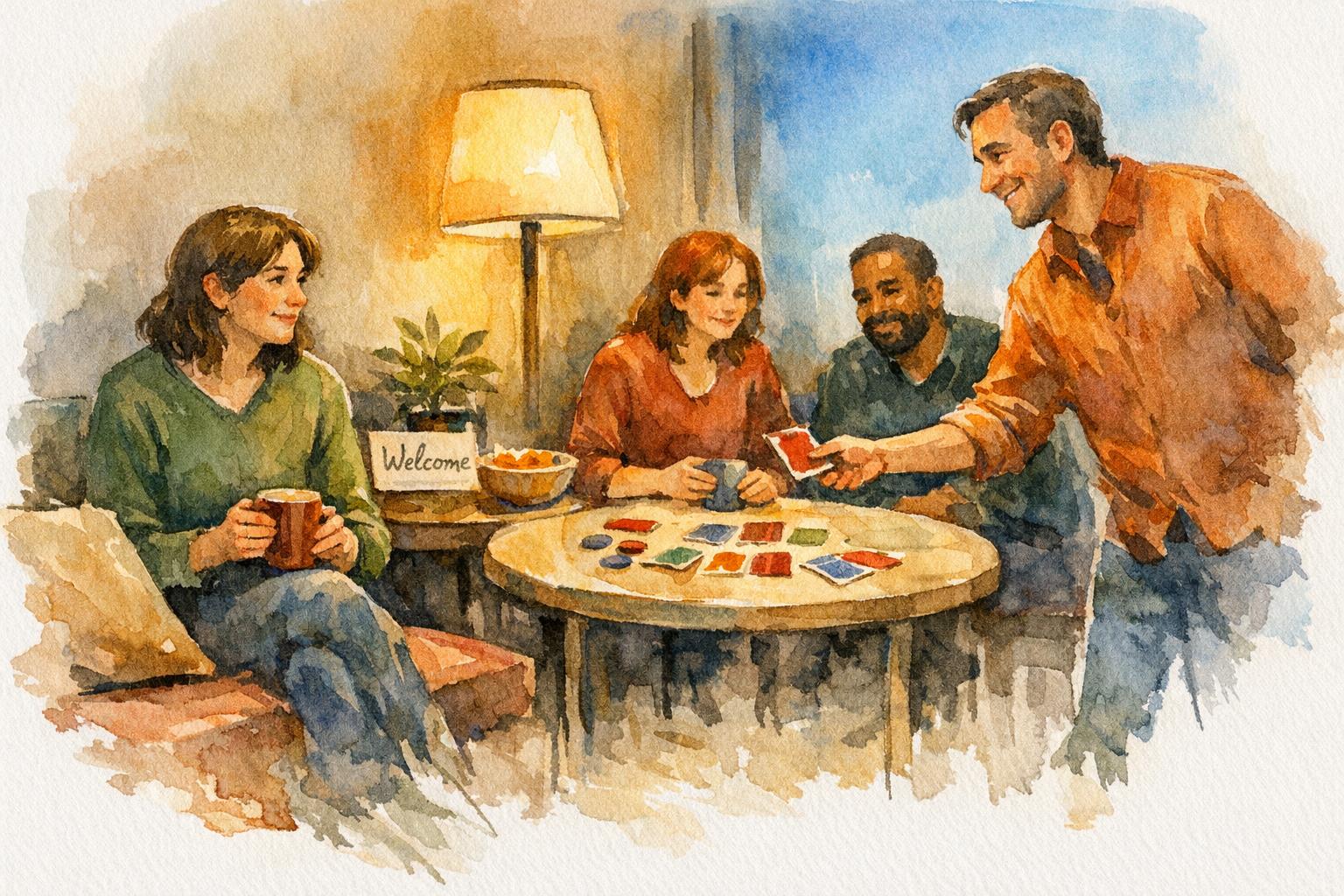
Social anxiety can turn game nights from fun gatherings into stressful experiences. For people managing this, the pressure of being watched, participating actively, and navigating group dynamics can feel overwhelming. However, game nights also offer structure, which can help reduce social tension when handled thoughtfully.
Here’s a quick breakdown of challenges and solutions:
Key Challenges:
- Fear of Judgment: Anxiety during turns, especially in games requiring performance (e.g., Pictionary, Werewolf).
- Group Dynamics: Overwhelming energy in large groups or fast-paced games.
- Physical Symptoms: Sweating, shaking, or avoiding eye contact, which can lead to disengagement.
- Joining New Groups: Hesitation to participate in unfamiliar or large gatherings.
Solutions for Hosts:
- Start with low-pressure games or icebreakers to ease tension.
- Keep groups small (4-6 people) to avoid long waits and side conversations.
- Offer a welcoming environment: greet guests, simplify rules, and create self-serve snack areas.
- Provide subtle support for anxiety symptoms, like quiet spaces or short breaks.
- Host regular gatherings to build familiarity and comfort over time.
Game nights thrive on connection, not competition. By making small adjustments, you can create an enjoyable space for everyone, including those dealing with social anxiety.
Social Anxiety at Game Nights: Challenges and Host Solutions Guide
Beat Social Anxiety with Board Games: The Ultimate Hack! | The Board Game Sherpa Ep012
sbb-itb-7b84150
Common Problems for Socially Anxious People at Game Nights
Game nights can be a lot of fun, but for those dealing with social anxiety, they can also present some tough challenges. Let’s take a closer look at the specific hurdles socially anxious individuals often face during these gatherings.
Fear of Being Judged While Playing
Imagine being in the middle of a game, and suddenly, all eyes are on you. For socially anxious individuals, this “spotlight effect” can feel overwhelming. Whether it’s explaining a rule or answering a question, that intense focus can heighten feelings of self-consciousness. Games that require performance - like drawing in Pictionary, acting in Taboo, or bluffing in social deduction games like Werewolf - can make things even harder. Even something as simple as taking a turn can feel nerve-wracking when every move seems scrutinized.
Feeling Overwhelmed by Group Energy
Large groups often bring their own set of challenges. Long waits between turns, unrelated side conversations, or even feeling left out can make the experience isolating. As Min(d)gle Games explains:
Large groups create predictable problems: long wait times between turns, side conversations that derail the game, some people checking out because they feel like they’re not really participating.
Fast-paced games only add to the pressure, especially when combined with loud banter or multiple conversations happening at once. For those sensitive to social tension, games that rely on public accusations or dramatic twists can feel especially stressful, creating an environment that’s tough to navigate.
Physical Signs of Anxiety
Physical symptoms like shaking hands, blushing, or sweating can be another layer of difficulty. The National Institute of Mental Health points out:
people with social anxiety may “blush, sweat, or tremble; have a rapid heart rate; feel their ‘mind going blank,’ or feel sick to their stomach” when performing in front of others.
Unfortunately, these visible signs can make anxiety feel even worse. To hide them, some might adopt coping strategies like gripping a drink tightly, avoiding eye contact by checking their phone, or sitting stiffly. While these behaviors help them manage their anxiety, they can sometimes come across as disengagement, making it harder to connect with others. This can discourage participation altogether.
Hesitation to Join Unfamiliar or Large Groups
Walking into a room full of unfamiliar faces is daunting for anyone, but it’s especially tough for those with social anxiety. Being asked to introduce yourself to the group can feel like a nightmare. Events with strangers or larger gatherings tend to amplify these feelings, making it harder for socially anxious individuals to attend in the first place. With an estimated 320 million people worldwide experiencing social anxiety, it’s clear that creating a welcoming atmosphere is essential. When approached thoughtfully, game nights have the potential to ease social fears rather than exacerbate them.
Understanding these obstacles can help hosts create an environment where everyone feels comfortable and included. Small adjustments can go a long way in making game nights enjoyable for all.
How Hosts Can Help Socially Anxious Guests
Creating a safe and inviting atmosphere for game nights can make a world of difference for socially anxious guests. With some thoughtful tweaks to your hosting style, you can help everyone feel at ease and enjoy the experience.
Begin with Icebreakers and Easy Games
Starting with light, low-pressure activities can set a relaxed tone. Icebreakers like “Silent Line” are great because they remove the stress of speaking while encouraging playful teamwork. As Melvin Adekanye, author of The Jam Social, puts it:
The silence strips away verbal performance. What remains is pure, silly cooperation.
Structured activities, such as “Human Bingo” with personalized prompts or a “Weather Check-in” to describe moods, offer clear goals that help reduce anxiety.
When it’s time for games, choose ones that mix humor with strategy. For instance, Red Tape by MINIFINITI ($39.99) is a fun, lighthearted game that encourages laughter and connection. As Adekanye says:
Shared regret is infinitely more bonding than shared success.
These initial activities help ease everyone into the evening, setting the stage for a more inclusive and comfortable group dynamic.
Build a Welcoming Group Environment
A small guest list - ideally 4 to 6 people - can go a long way toward preventing overwhelming side conversations and ensuring everyone feels included. As Min(d)gle Games notes:
The social hosting matters as much as the game selection.
As the host, your role extends beyond picking games. Greet guests warmly, introduce newcomers, and check in with quieter attendees throughout the evening. When explaining game rules, skip the lengthy rulebook reading. Instead, summarize the goal and explain key mechanics, and let everyone learn by playing.
To keep things simple and stress-free, set up self-serve drink and snack stations with easy-to-eat options. This eliminates the need for guests to ask for anything, helping them feel more comfortable.
Help Guests Deal with Physical Symptoms
If you notice someone feeling overwhelmed, offer subtle support. A quick check-in and the “333 rule” (identify three objects, three sounds, and move three body parts) can help ease anxiety.
Pay attention to the physical setup as well. Comfortable seating with clear views of the play area, along with soft but adequate lighting, creates a relaxed environment. Designate a quiet space where guests can step away to reset if needed. Encourage breaks for stretching or listening to music - simple actions that can help guests decompress.
Games that allow light movement or encourage laughter can also help ease tension. As Healthline highlights:
Humor naturally relaxes us.
By incorporating these small but meaningful touches, you create a space where guests can truly enjoy themselves.
Host Regular Small Gatherings
Consistency helps build trust and familiarity. Hosting regular game nights with the same core group allows socially anxious guests to feel more comfortable over time. Gradually introducing new members can further expand the circle without overwhelming anyone.
MINIFINITI’s weekly game nights are a great example of how regular gatherings can foster connections and create something for guests to look forward to. Ending the night on a high note, while the fun is still in full swing, ensures everyone leaves with positive memories. As Min(d)gle Games wisely says:
The best game nights aren’t about the games. They’re about creating space for genuine connection. Putting phones away. Looking at each other. Laughing together.
Conclusion
Game nights should be about building connections, not creating stress. By considering the needs of guests with social anxiety, hosts can turn what might feel intimidating into a truly enjoyable experience. The tips shared - like starting with icebreakers, keeping groups small, providing physical comfort, and hosting regularly - aren’t just helpful; they’re key to making everyone feel welcome and at ease.
Research from 2017 highlights that tabletop games can help reduce stress and promote calm by shifting focus away from anxious thoughts. However, this benefit only surfaces in a supportive setting, which underscores the importance of creating a positive environment.
As Min(d)gle Games aptly puts it:
Games are just the vehicle. Your job as a host is to choose the right vehicle and drive it well.
Thoughtful hosting creates lasting benefits. Guests leave not only looking forward to the next gathering but also feeling more confident in other social situations.
Interestingly, a 2013 study also found that playing board games might help reduce cognitive decline and support brain health over time.
Your efforts as a host can transform an ordinary night into something truly special. With a little preparation and mindfulness, you can create an evening where anxieties fade, and meaningful connections take center stage.
As Bunchups beautifully puts it:
The real magic happens when you join others around a table, set your anxieties aside, and let the game guide you toward authentic human connection.
At the end of the day, people won’t remember who won or lost. What stays with them is the joy of being fully present, engaged, and connected. Every thoughtful choice you make as a host strengthens those bonds and creates memories worth cherishing.
FAQs
What games are best for social anxiety?
Games that are ideal for individuals dealing with social anxiety often focus on low-pressure, inclusive, and fun gameplay. Light-hearted party games like Apples to Apples or Telestrations offer a relaxed atmosphere filled with humor and creativity. For those who prefer cooperative experiences, games like Ticket to Ride or The Crew emphasize teamwork over competition, helping to build a sense of camaraderie and ease among players. These options create an environment where everyone can feel comfortable and engaged.
How can I host a game night without overwhelming people?
Planning ahead and setting up a cozy space can make game night enjoyable for everyone. Here’s how to keep things smooth and fun:
- Pick the right games: Go for games that are easy to learn and cater to different experience levels. This way, everyone feels included.
- Set up a comfortable space: Good lighting and plenty of seating are key. Use spill-proof cups to avoid accidents.
- Snacks that work: Stick to light, mess-free options like popcorn or grapes. They’re easy to grab without interrupting the game.
- Ease into it: Start with simple ice-breaker games to get everyone relaxed, then move on to more involved ones. Wrap things up before players start feeling tired.
- Stay organized: Pre-sort game pieces and keep some wipes nearby to handle any quick cleanups.
With a little preparation, you can create a laid-back vibe where everyone can focus on having fun!
What should I do if anxiety hits during a game?
If anxiety creeps in while gaming, consider stepping away for a moment to regroup. A short break or switching to a lighter, less intense activity can work wonders. Opting for games with straightforward rules or a humorous theme can also help lighten the mood and reduce stress. Non-competitive games are another great option - they take the pressure off and make it easier for everyone to join in and have fun in a supportive atmosphere.