
Game Talk
Role Assignment in Social Deduction Games
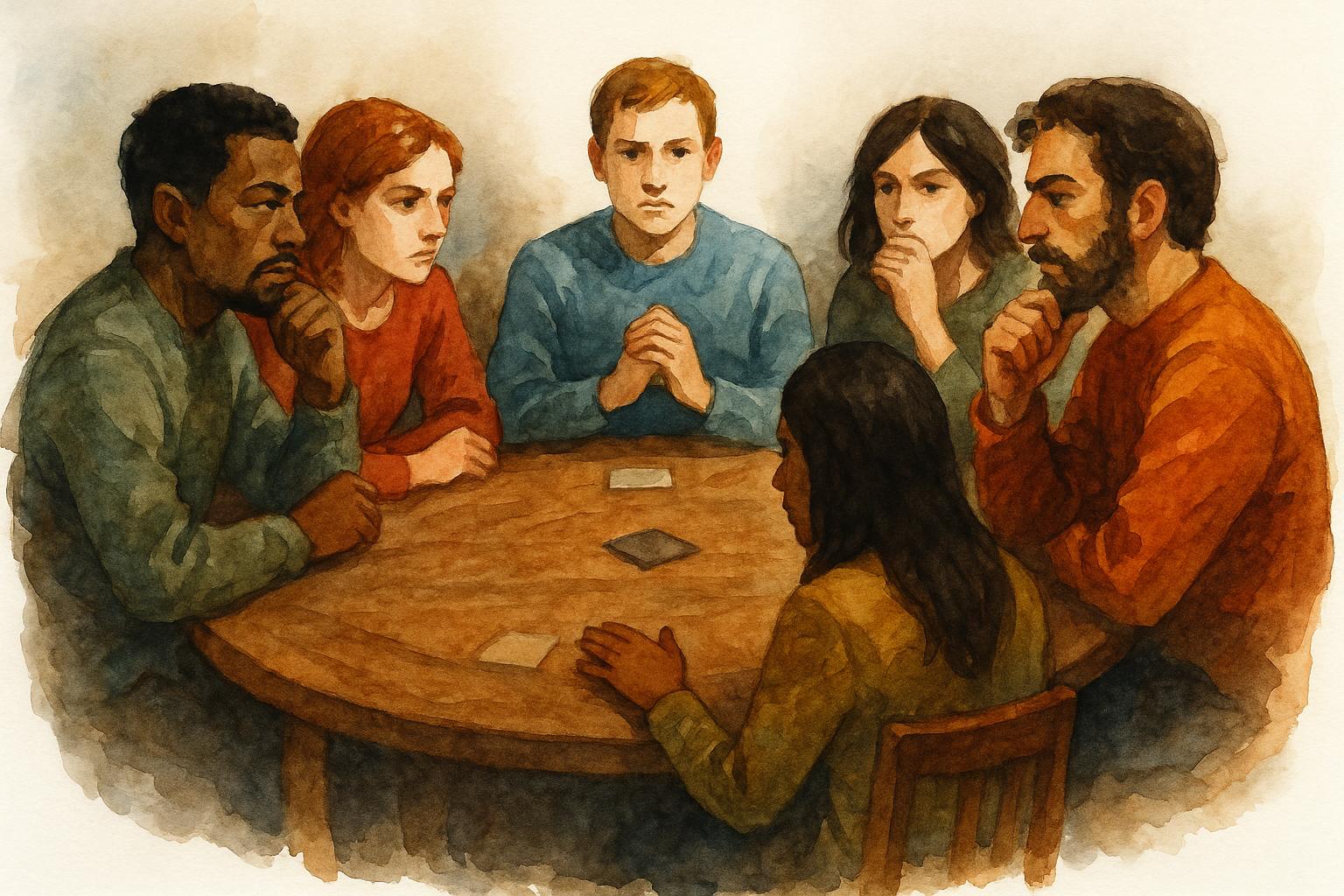
Role assignment in social deduction games is the backbone of what makes these games engaging and dynamic. Here’s a quick breakdown of the key points:
- Purpose of Roles: Players are divided into two main groups - those with hidden knowledge (like spies or werewolves) and those without. This creates tension and drives gameplay.
- Role Assignment Methods: Roles can be assigned randomly (cards, apps) or deliberately (moderator selection). Random methods keep things fair and unpredictable, while tailored setups create specific dynamics.
- Role Types: Roles fall into three categories:
- Core Roles: Basic roles like villagers or resistance members.
- Support Roles: Roles with abilities like detectives or healers that add depth.
- Disruptive Roles: Roles like traitors or jesters that introduce twists.
- Balancing Roles: The mix of roles should fit the group size and experience level. Smaller groups need simpler setups, while larger groups can handle more complexity.
- Information Dynamics: The game thrives on partial or hidden information. Players must decide how much to share or conceal to achieve their goals.
- Advanced Methods: Techniques like dynamic role shifts, player drafts, or evolving abilities can add layers of unpredictability for experienced groups.
Whether you’re designing a game or tweaking an existing one, balancing roles, information, and player dynamics is key to creating a fun and engaging experience.
Basic Role Assignment Mechanics
How to Assign Roles
The way roles are assigned in social deduction games can shape the entire experience. Randomized methods, like shuffled cards or tokens, are a classic approach that ensures fairness while keeping the element of surprise intact. This technique minimizes accusations of bias and keeps players guessing, which is crucial for maintaining the excitement.
Card-based systems are a favorite for groups of 6-12 players. Each role is printed on a card, and players draw from a face-down deck. The act of drawing adds to the suspense, as players discover their roles privately. This method is straightforward, doesn’t rely on technology, and is easy for game designers to include in their setups.
App-based assignment has gained traction, especially for larger groups or games with intricate role interactions. Apps can automatically handle role dependencies and balance team compositions, making them ideal for more complex scenarios. They also eliminate the need for physical materials and provide a discreet way to deliver role-specific information.
Pre-game selection is a more tailored approach, often used by experienced groups. Here, a game moderator chooses roles deliberately, either to create interesting dynamics or to avoid troublesome combinations that might derail the game. While this method requires extra preparation, it allows for a customized experience that can heighten the gameplay.
Each of these methods sets the foundation for a balanced and engaging game, ensuring that players dive into the action with equal footing.
Types of Roles in Social Deduction Games
Once roles are assigned, the game’s dynamics come to life. Hidden roles are at the heart of social deduction games, shaping win conditions and available actions. A classic example is the villager-werewolf setup: villagers aim to uncover the werewolves, while the werewolves try to eliminate villagers without exposing themselves. The tension lies in the fact that everyone looks the same on the surface, but their goals couldn’t be more different.
Team-based roles naturally divide players into alliances and adversaries. For instance, players might be part of the resistance, spies, or neutral parties with their own objectives. Some roles, like spies, come with shared knowledge, while others, like resistance members, must figure out who to trust. This uneven distribution of information fuels much of the game’s strategy.
Special ability roles add extra layers of strategy. A detective might investigate another player’s identity, while a bodyguard protects someone from elimination. Other roles, like a mayor with a tie-breaking vote or a fool who wins by getting eliminated, introduce unique twists. These roles ensure the game doesn’t devolve into a simple popularity contest by giving players tangible actions that can shift the outcome.
Traitor roles bring the ultimate twist. A player might secretly work against their team or switch allegiances mid-game. These roles inject paranoia, as even trusted allies might turn out to be working against the group. The uncertainty they create is a key ingredient in keeping players on edge.
How Different Information Levels Create Tension
The interplay between roles and the flow of information is what makes social deduction games so engaging. At the core of these games is information asymmetry - some players know more than others. For example, in a werewolf game, the werewolves know each other’s identities, but the villagers don’t. This imbalance sets the stage for deception and strategy.
Partial information roles often lead to the most intriguing scenarios. A seer might uncover one player’s identity each round, slowly piecing together the puzzle. Meanwhile, a spy might know only some of their teammates, introducing uncertainty even among those who are supposed to be allies. These roles strike a balance between full knowledge and complete ignorance, keeping players guessing.
Shifting information levels ensure the game remains dynamic. As the game progresses, investigations reveal identities, eliminations narrow the field, and special abilities come into play. Players who felt confident early on might find their assumptions upended by new developments, forcing them to rethink their strategies.
The distinction between public and private information adds another layer of strategy. Players must weigh the risks and rewards of sharing what they know. A detective might reveal their findings to help their team, but doing so could make them the next target for elimination. This constant push and pull between transparency and self-preservation is where much of the game’s psychological depth lies.
The best social deduction games strike a careful balance with their information mechanics. Too much secrecy can leave players feeling lost, while too much openness removes the mystery that makes these games so thrilling. The ideal setup gives players just enough clues to form theories while leaving room for lively debates and surprising outcomes.
Social Deduction Starter Guide
How to Design Balanced Roles
Creating balanced roles is all about refining the gaming experience to keep players engaged while maintaining fair and dynamic gameplay. Well-designed roles should feel impactful without overshadowing the core mechanics or disrupting the balance between factions.
Rules for Creating Good Roles
Here are some key principles to ensure each role contributes meaningfully to the game:
- Clear objectives: Every role needs a win condition that’s easy to understand. Players should focus on strategy, not trying to decode the rules.
- Balanced power levels: No single role should dominate the game. For example, a role with investigative powers might be limited to one use per round or carry risks, like being exposed. This ensures roles feel impactful but not invincible.
- Multiple strategic paths: Roles should offer choices to keep them interesting. A bodyguard, for instance, might choose between protecting one player consistently or spreading their protection across several targets.
- Bluffing opportunities: Especially in social deduction games, players need ways to mislead others. Even a basic role like a villager can claim to be something else, adding layers of uncertainty and intrigue.
- Interaction potential: Roles should encourage conversation, alliances, and debates. Isolated roles can weaken the social dynamics that make these games so engaging.
3 Main Role Categories: Core, Support, and Disruptive
Roles can generally be grouped into three main categories, each serving a distinct purpose in the game:
Core roles
These are the foundation of the game and typically make up the majority of players. Examples include villagers, citizens, or resistance members. While core roles may lack special abilities, they often wield collective power - like voting to eliminate players. The aim is to ensure these players feel their participation directly impacts the game’s outcome.
Support roles
Support roles add depth by gathering information, protecting others, or coordinating teams. Think detectives, doctors, or seers. These roles enhance the game’s puzzle-like elements but need careful balancing. For example, a detective who uncovers too much too quickly can short-circuit the social dynamics. Gradual or partial information keeps things engaging, like a seer who learns a player’s alignment but not their specific role.
Disruptive roles
These roles shake things up and force players to adapt. Examples include traitors, jesters, or roles with unique win conditions. Disruptive roles keep games unpredictable and memorable. For instance, a jester who wins by getting eliminated adds tension to every vote but shouldn’t be so powerful that they dominate the game.
Adjusting Roles for Different Group Sizes and Experience Levels
Role design isn’t one-size-fits-all; it needs to adapt to the group’s size and experience level to keep the game balanced and enjoyable.
Small groups (5-7 players)
With fewer players, every role carries more weight. Abilities should be simplified or toned down to avoid overwhelming the game. For example, a detective in a 6-player game might only get limited information to maintain balance. Roles in small groups should also encourage active participation to keep the game lively.
Large groups (10+ players)
Larger groups can handle more complex roles and interactions. You can include multiple investigators, protectors, or even competing factions. Roles that create alliances or subgroups - like mafia members who know each other or masons who share trust - help players navigate the added complexity.
Beginner-friendly adjustments
For newcomers, simplicity is key. Roles with clear, straightforward abilities - like a detective who gets definitive “good” or “evil” results - are easier to grasp. Avoid roles with complex mechanics or strict timing requirements.
Roles for experienced players
Veteran players enjoy roles with more depth, like those requiring conditional abilities or strategic planning. A seemingly weak role that becomes powerful with clever play can be especially rewarding for experienced participants.
The best way to fine-tune roles is through playtesting. Different groups will respond differently - what excites a group of strategy enthusiasts might confuse casual players. Pay attention to which roles spark enthusiasm and which leave players feeling disengaged. Ultimately, the most successful roles are the ones players can’t wait to try again, win or lose.
sbb-itb-7b84150
Best Practices for Assigning Roles
Assigning roles effectively is crucial in social deduction games. Poorly thought-out assignments can turn even the most well-designed game into a frustrating experience. The right approach, however, keeps players engaged and ensures every session feels fresh.
Random Assignment and Role Distribution
Random assignment is a staple for many social deduction games. It removes bias, keeps things unpredictable, and makes every role reveal exciting. When players don’t know what to expect, they stay engaged from the moment the game begins. This element of surprise also levels the playing field, ensuring fairness.
That said, balance is key. For example, in games with factions like mafia, the informed minority should typically make up 20-30% of the players. Too few, and they won’t have enough influence. Too many, and the majority might feel overwhelmed. Tracking win rates over multiple sessions is a great way to spot imbalance. If one faction keeps dominating, tweak the role distribution to even things out.
Another way to keep things interesting is by using role pools instead of fixed setups. Create a collection of 15-20 roles and randomly select the appropriate number for each game. This keeps even seasoned players on their toes, preventing them from relying on predictable strategies.
For groups looking to go beyond randomness, advanced role assignment methods can add layers of complexity and excitement.
Advanced Role Assignment Methods
While random assignment ensures fairness, advanced methods can tailor the experience to suit different player groups and preferences. These approaches often introduce dynamic elements that evolve as the game unfolds.
- Dynamic role assignment: Roles can change mid-game, adding twists and surprises. For instance, a villager might discover they’re actually the mayor with a double vote, or a mafia member might find out they have a secret ally. Some games also use conversion mechanics, where players can switch factions during play.
- Draft-style assignment: This method works well with experienced groups. Players take turns selecting roles from a shared pool, creating unique combinations each time. To prevent overpowered setups, carefully curate the roles available for drafting. While this approach requires more effort, it gives players control over their experience.
- Conditional assignment: Here, role distribution adapts to in-game events. For instance, if the first player eliminated is town-aligned, the next role revealed might be stronger to balance the scales. This self-adjusting system keeps the game dynamic and fair.
- Role inheritance: When a player is eliminated, their abilities pass to another. For example, if a detective dies, their investigation notes might transfer to another town member. This keeps eliminated players engaged and ensures critical abilities remain in play.
- Hidden role evolution: Players can unlock new abilities based on their actions. For example, a villager who correctly identifies a mafia member might gain investigative powers. This rewards strategic thinking and keeps the power dynamics fluid.
Comparison Tables for Role Assignment Methods
Each role assignment method has its strengths and weaknesses. Choosing the right one depends on your group and the type of game you’re playing.
Assignment Method
Balance
Replayability
Complexity
Best For
Pure Random
High
High
Low
New players, casual groups
Weighted Random
High
High
Medium
Regular groups, tournament play
Player Draft
Medium
High
High
Experienced players, custom games
Dynamic Assignment
Variable
High
High
Advanced players, experimental games
Fixed Setup
High
Low
Low
Teaching games, specific scenarios
- Pure random assignment is simple and fair, but luck can occasionally create unbalanced games.
- Weighted random adds a layer of adjustment by tweaking probabilities based on recent outcomes. For instance, if the town has won several games in a row, the system might increase the odds of stronger mafia roles appearing.
- Player drafts offer the most strategic depth, making them ideal for groups who play together regularly and enjoy experimenting with role combinations.
- Dynamic systems introduce surprises and twists, which can lead to unforgettable moments. However, they require careful design to avoid confusion.
Combining methods can also create a well-rounded experience. For example, start with random assignment to establish baseline dynamics, then move to a draft for experienced players seeking more control. Finally, end with a dynamic game to add unexpected twists.
Refining Your Approach
Keep track of role distributions, win rates, and player feedback to fine-tune your system. Pay attention to which setups lead to exciting games and which ones fall flat. This data will help you adjust and improve over time.
It’s also important to consider player psychology. Even a perfectly balanced random system can feel unfair if someone gets the same role three times in a row. To address this, you could implement “role cooldowns”, preventing players from receiving the same role consecutively. Alternatively, allow each player a single “veto” per session to reject an assigned role.
Case Studies: Role Assignment in Popular Social Deduction Games
Examining how well-known games handle role assignment reveals strategies that shape the player experience. These examples highlight how different approaches to role assignment create engaging and dynamic gameplay.
Mafia and Werewolf
Mafia and Werewolf rely on straightforward random role distribution to build tension and excitement. Typically, about 25–30% of players receive secret roles, while the rest take on the role of villagers. This structure is easy to scale: for smaller groups of 7–9 players, two secret roles work well; for 10–12 players, three secret roles are recommended; and for groups of 15 or more, four secret roles strike a good balance.
The secret to these games’ success lies in maintaining a town majority, usually around 70–75%, which ensures fairness and keeps the gameplay competitive.
To add complexity, larger games often introduce special roles like the Detective, who can investigate one player each night, and the Doctor, who can protect a player from elimination. These roles add depth without overwhelming newcomers, keeping the game accessible yet strategic.
The Resistance and Avalon
The Resistance and Avalon take a different approach, focusing on mission-based gameplay and identity cards rather than secret abilities. Unlike Mafia and Werewolf, these games remove player elimination entirely, shifting the focus to strategic deception and teamwork. Players are assigned to one of two groups: the Resistance or Imperial Spies, with spies knowing each other’s identities.
Avalon builds on this by introducing special roles that create layers of intrigue. For example, Merlin knows the identities of the evil players but must stay hidden, while Percival knows Merlin’s identity but not the identities of the spies. Morgana adds another twist by appearing as Merlin to Percival, creating a web of misdirection that keeps experienced players engaged.
These games also scale effectively with group size. A five-player game might include two spies and three Resistance members, while a ten-player game could feature four spies and six Resistance members. Adjusting the inclusion of special roles ensures balance, regardless of the number of players.
The table below compares the role assignment mechanics, information dynamics, ideal group sizes, and standout features of these games:
Game
Role Assignment Style
Information Structure
Best Group Size
Notable Feature
Mafia/Werewolf
Random distribution
Simple asymmetric
8–12 players
Established genre foundation
The Resistance/Avalon
Identity-based
Multiple information layers
5–10 players
Eliminated player elimination
Both Mafia/Werewolf and The Resistance/Avalon succeed because their role assignment systems foster interaction, strategy, and just the right amount of unpredictability to keep players coming back for more.
Key Takeaways for Role Assignment
Summary of Best Practices
The most engaging social deduction games strike a balance where no single role dominates, ensuring tension and keeping all players invested throughout the experience.
Roles should be adjusted to fit the group size, with around 25-30% of players assigned to secret roles. This ratio allows minority factions to have an impact without overpowering the majority, maintaining a fair and exciting dynamic.
Incorporating a mix of core, support, and disruptive roles helps create a well-rounded gameplay experience. Each type of role serves a unique purpose: core roles drive the main objectives, support roles add depth, and disruptive roles keep the game unpredictable.
When assigning roles, random distribution eliminates bias, while role drafting introduces a layer of strategy for seasoned players. Both methods preserve the uncertainty that fuels the thrill of deduction games.
Modern role design prioritizes interdependent abilities rather than isolated powers. Roles that interact with others encourage players to focus on group dynamics and foster more engaging, interconnected gameplay.
These best practices lay the foundation, but new trends are pushing role assignment into exciting territory.
Future Trends in Role Assignment
The future of role assignment is being shaped by digital tools. Apps and online platforms now handle complex role distributions seamlessly, making it easier for designers to implement intricate role relationships. This technology also enables conditional roles that activate based on specific group setups or player actions, adding a layer of complexity without burdening players with manual setup.
Another emerging concept is adaptive role systems, which adjust role abilities and information levels based on factors like player performance or game history. This ensures that experienced players can’t rely solely on memorized tactics, keeping the gameplay fresh and challenging. Some designs even allow roles to evolve mid-game, reacting to player behavior in real time.
Hybrid role categories are also gaining traction. These roles defy traditional classifications, offering players limited information at the start that grows over time or shifting loyalties based on in-game events. This trend highlights designers’ confidence in players’ ability to navigate more nuanced and layered roles.
Cultural customization is another intriguing development. Designers are tailoring role distributions to reflect regional preferences, such as a focus on group harmony or a preference for direct confrontation. These adjustments make games resonate more deeply with players in different parts of the world.
Finally, modular role systems are giving players and game masters unprecedented flexibility. By treating roles as customizable components, groups can mix and match elements to create unique, balanced experiences tailored to their preferences. This approach empowers experienced players to craft games that suit their specific playstyles.
The future of role assignment promises to be more intricate yet approachable. The challenge for designers will be to embrace these innovations while preserving the simplicity that makes social deduction games so universally enjoyable.
FAQs
How can I create balanced roles in social deduction games for groups of different sizes?
To design roles that work well in social deduction games, start by testing with different group sizes to ensure the game feels fair and engaging for everyone involved. Tailor the number and type of roles to match the group size, ensuring each role adds value to the game’s overall flow and strategy.
For bigger groups, try splitting players into teams and assigning roles in proportion to the group size. Smaller teams can be balanced by giving them roles with a stronger impact, helping to level the competition. Consider creating roles with flexible influence, so the gameplay stays dynamic and enjoyable, whether you’re working with a handful of players or a full house. This way, every participant stays invested, making the experience more immersive for all.
What are some advanced ways to assign roles that can make social deduction games more exciting for experienced players?
For experienced players, shaking up the usual format with advanced role assignment methods can bring a fresh twist to social deduction games. One idea is to incorporate customizable roles - characters with unique abilities that open the door for inventive strategies and unexpected moves. Alternatively, you could try dynamic role systems, where roles evolve during the game based on player actions or specific milestones, adding an exciting layer of unpredictability.
These tweaks not only keep seasoned participants on their toes but also make the gameplay more thrilling and challenging, ensuring it never feels repetitive.
How do digital tools and apps improve role assignment in social deduction games?
Digital tools and apps have transformed how roles are assigned in social deduction games, making the process faster, precise, and more enjoyable. By automating role distribution, they remove the chance of human mistakes or bias, ensuring that every player gets their role smoothly and in complete privacy.
These tools also introduce exciting new gameplay possibilities, like secret role changes during the game or tailored role instructions - features that are tough to pull off with traditional methods. On top of that, they enhance the experience for online multiplayer games, making them easier to access and far more immersive for players.